Slave ship
Videos
Slave ships were large cargo ships specially built or converted from the 17th to the 19th century for transporting slaves. Such ships were also known as "Guineamen" because the trade involved human tr

c. 1830 engraving by Johann Moritz Rugendas of the deck of slave ship headed to Brazil; Rugendas was an eyewitness to the scene.

Upper deck of the Marie Séraphique upon arrival at a port in Saint-Domingue

View of the same ship's slave deck
Atlantic slave trade
Videos
The Atlantic slave trade or transatlantic slave trade involved the transportation by slave traders of enslaved African people to the Americas. This trade was operated by slave ships from both Europe a
Slave ship
…a century after the arrival of Europeans to the Americas, demand for unpaid labor to work plantations made slave-trading a profitable business. The Atlantic slave trade peaked in the last two decades of the 18th century, during and following the Kongo Civil War. To ensure profitability, the owners of the ships divided…
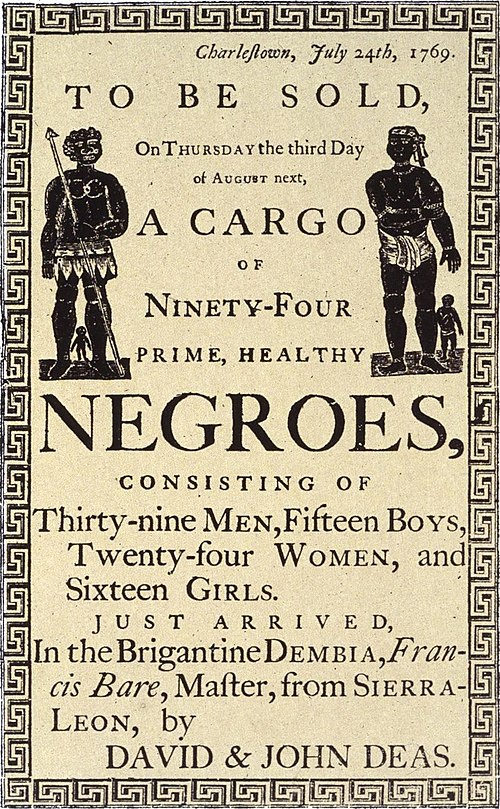
Reproduction of a handbill advertising a slave auction in Charleston, British Province of South Carolina, in 1769

Portuguese mariners used caravel ships and traveled south along the West African coast and colonised Cape Verde in 1462.

Noah curses Ham by Gustave Doré – the curse of Ham was used as a justification to enslave Africans.

Elmina Castle in the Guinea coast, present-day Ghana, was built in 1482 by Portuguese traders. Its primary purpose was trading in gold, but when the outward slave trade from the Gold Coast began, it was used in the slave trade. The Gold Coast was a late entrant to the outward slave trade (though there was an inward trade to supply workers in the gold mines).