Slavery Abolition Act 1833
Videos
The Slavery Abolition Act 1833 was an act of the Parliament of the United Kingdom which abolished slavery in the British Empire by way of compensated emancipation. The act was legislated by Whig Prime
Grey's Monument in Newcastle upon Tyne, in remembrance of Prime Minister Charles Grey, 2nd Earl Grey, abolisher of slavery in the British Empire

William Wilberforce
Videos
William Wilberforce was a British politician, philanthropist, and a leader of the movement to abolish the Atlantic slave trade. A native of Kingston upon Hull, Yorkshire, he began his political career
Slavery Abolition Act 1833
…of the British Empire. By the late 18th century, Britain was simultaneously the largest slave trader and centre of the largest abolitionist movement. William Wilberforce had written in his diary in 1787 that his great purpose in life was to suppress the slave trade before waging a 20-year fight on the industry. Parliament…
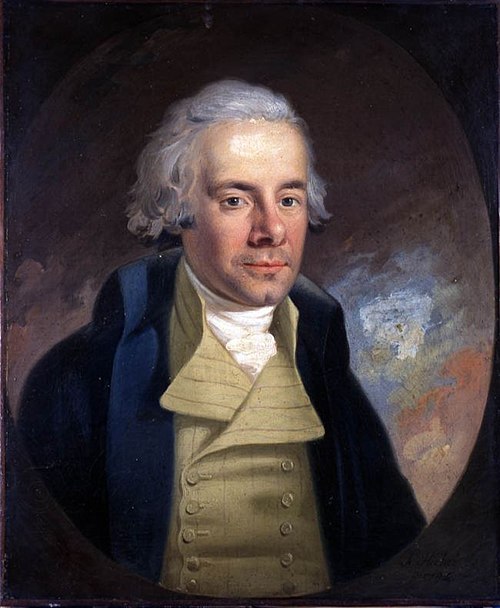
Portrait c. 1794

A statue of William Wilberforce outside Wilberforce House, his birthplace in Hull

William Wilberforce by John Rising, 1790, pictured at the age of 30

Diagram of a slave ship, the Brookes, illustrating how slaves were transported