Slipware is pottery identified by its primary decorating process where slip is placed onto the leather-hard (semi-hardened) clay body surface before firing by dipping, painting or splashing. Slip is an aqueous suspension of a clay body, which is a mixture of clays and other minerals such as quartz, feldspar and mica. The slip placed onto a wet or leather-hard clay body surface by a variety of techniques including dipping, painting, piping or splashing. Slipware is the pottery on which slip has been applied either for glazing or decoration. Slip is liquified clay or clay slurry, with no fixed ratio of water and clay, which is used either for joining pottery pieces together by slip casting with mould, glazing or decorating the pottery by painting or dipping the pottery with slip.
Jar, Giyan IV type, Western Iran, 2500-2000 BC, earthenware with slip-painted decoration
Charger with Charles II in the Boscobel Oak, English, c. 1685. Such large plates, for display rather than use, take slip-trailing to an extreme, building up lattices of thick trails of slip.
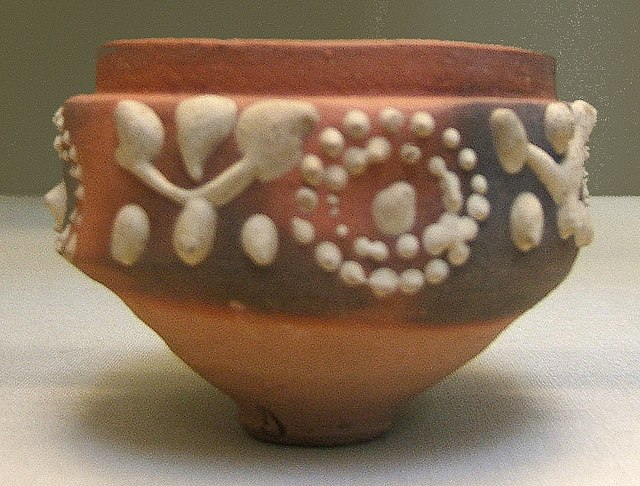
Simple slip-trailing in thick blobs, Roman Egypt, 0-200 AD
Bowl with strutting bird, Sultanabad ware, Iran, Ilkhanid period, first half of 14th century, earthenware with gray engobe and underglaze painting in blue, black, white slip
A slip is a clay slurry used to produce pottery and other ceramic wares. Liquified clay, in which there is no fixed ratio of water and clay, is called slip or clay slurry which is used either for joining leather-hard (semi-hardened) clay body together by slipcasting with mould, glazing or decorating the pottery by painting or dipping the pottery with slip. Pottery on which slip has been applied either for glazing or decoration is called slipware.
African red slip ware: moulded Mithras slaying the bull, 400 ± 50 AD.
Charger with Charles II in the Boscobel Oak, English, c. 1685. The plate's diameter is 43 cm; such large plates, for display rather than use, take slip-trailing to an extreme, building up lattices of thick trails of slip.
Chinese porcelain sugar bowl with combed, slip-marbled decoration, c. 1795
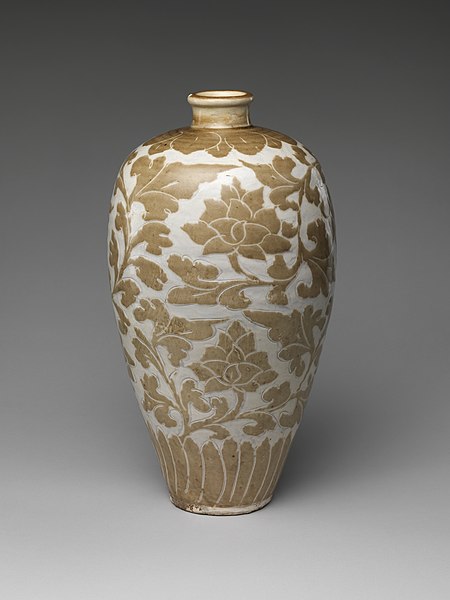
Chinese Cizhou ware vase with cut-glaze decoration