Sogdia
Videos
Sogdia or Sogdiana was an ancient Iranian civilisation located between the Amu Darya and the Syr Darya rivers, in what is now Uzbekistan, Turkmenistan, Tajikistan, Kazakhstan, and Kyrgyzstan. Sogdiana
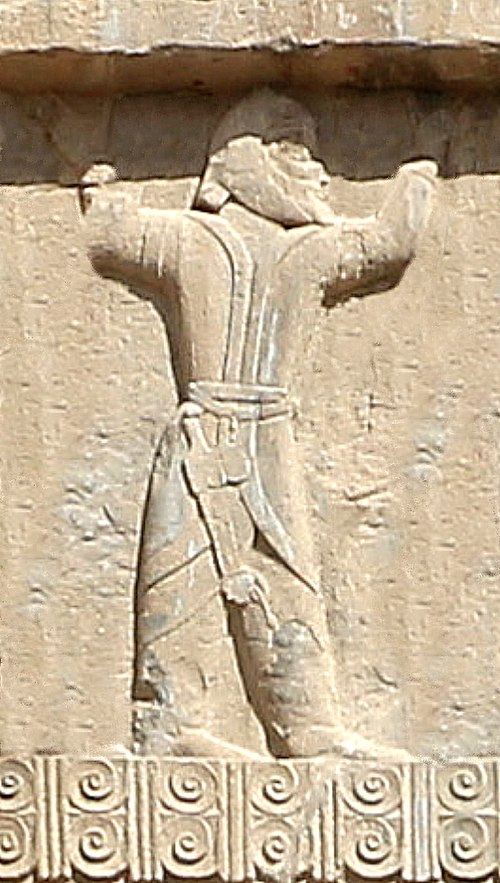
Sogdian soldier circa 338 BCE, tomb of Artaxerxes III.

Sogdians on an Achaemenid Persian relief from the Apadana of Persepolis, offering tributary gifts to the Persian king Darius I, 5th century BC

Head of a Saka warrior, as a defeated enemy of the Yuezhi, from Khalchayan, northern Bactria, 1st century BCE.

A Yuezhi (left) fighting a Sogdian behind a shield (right), Noin-Ula carpet, 1st century BC/AD.
Sogdian language
Videos
The Sogdian language was an Eastern Iranian language spoken mainly in the Central Asian region of Sogdia, located in modern-day Uzbekistan, Tajikistan, Kazakhstan and Kyrgyzstan; it was also spoken by
Sogdia
…and following the Muslim conquest of Transoxiana. The Sogdian city-states, although never politically united, were centred on the city of Samarkand. Sogdian, an Eastern Iranian language, is no longer spoken. However, a descendant of one of its dialects—Yaghnobi—is still spoken by the Yaghnobis of Tajikistan…

Seal with two facing busts and Sogdian inscription "Indamic, Queen of Zacanta", Kushano-Sasanian period, 300-350 CE. British Museum 119999.

Sogdian text from a Manichaean creditor letter from around 9th to 13th century
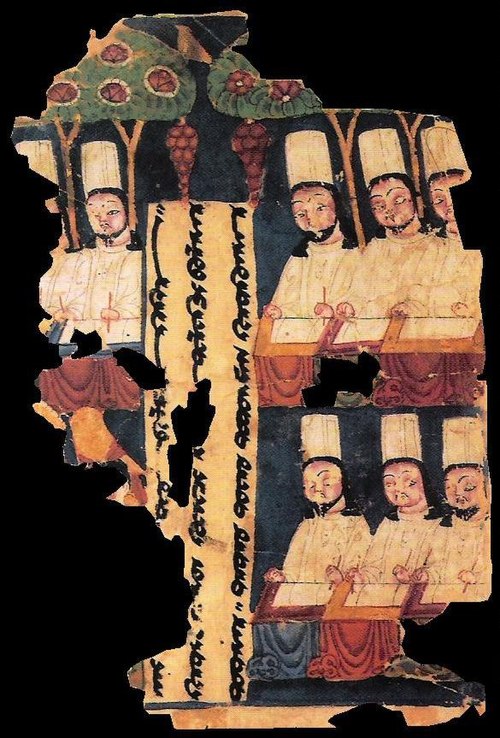
Manichaean priests (Uyghur Turks) writing Sogdian manuscripts, in Khocho, Tarim Basin, c. 8th/9th century AD

Sogdian Christian text written in Estrangelo, discovered at Turpan, 9th—11th century.