Solomon's Temple
Videos
Solomon's Temple, also known as the First Temple, was a legendary Temple in Jerusalem believed to have existed between the 10th and 6th centuries BCE. Its description is largely based on narratives in
16th century depiction by François Vatable


Modern-day reconstruction of Jerusalem during the reign of Solomon (10th century BCE) from Jerusalem Walls National Park. The temple stands on the original Mount Moriah, as it looked prior to its expansion by King Herod in the 1st century BCE.

The Dedication of Solomon's Temple, by Jan Luyken (1700)
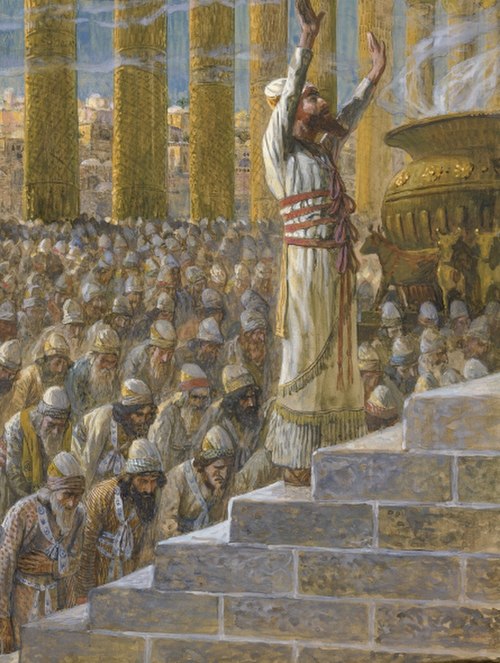
King Solomon dedicates the Temple at Jerusalem. Painting by James Tissot or follower, c. 1896–1902.
Second Temple
Videos
The Second Temple was the temple in Jerusalem that replaced Solomon's Temple, which was destroyed during the Babylonian siege of Jerusalem in 587 BCE. The Second Temple was constructed around 516 BCE
Solomon's Temple
…in Ain Dara and Tell Tayinat. Seventy years later, when Cyrus of Persia conquered Babylonia, he allowed the exiles to return to Judea and build the Second Temple. Archeologist Israel Finkelstein writes that the exact location of the Temple is unknown. It is believed to have been situated upon the hill that forms…

Model of Herod's Temple (inspired by the writings of Josephus) displayed within the Holyland Model of Jerusalem at the Israel Museum

Rebuilding of the Temple (illustration by Gustave Doré from the 1866 La Sainte Bible)

Herod's Temple as imagined in the Holyland Model of Jerusalem; east at the bottom

1st-century BCE relief with rosettes found beneath the Temple Mount's southern wall, now on display at the Davidson Center