Space Shuttle Endeavour
Videos
Space Shuttle Endeavour is a retired orbiter from NASA's Space Shuttle program and the fifth and final operational Shuttle built. It embarked on its first mission, STS-49, in May 1992 and its 25th and

Endeavour in orbit in 2008, during STS-123

Endeavour rollout ceremony in April 1991

Endeavour as photographed from the International Space Station as it approached the station during STS-118
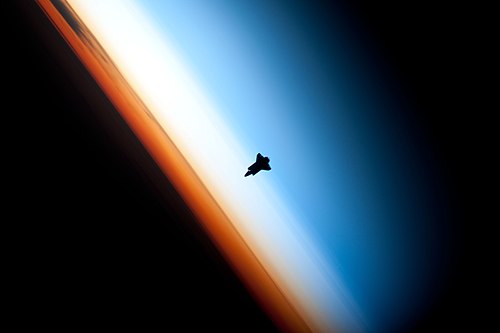
Endeavour appears to straddle the stratosphere and mesosphere in this 2010 photo taken from the International Space Station
Space Shuttle orbiter
Videos
The Space Shuttle orbiter was the spaceplane component of the Space Shuttle, a partially reusable orbital spacecraft system that was part of the discontinued Space Shuttle program. Operated from 1981
Space Shuttle Endeavour
…Space Shuttle Endeavour (Orbiter Vehicle Designation: OV-105) is a retired orbiter from NASA's Space Shuttle program and the fifth and final operational Shuttle built. It embarked on its first mission…

Discovery approaches the International Space Station (ISS) on STS-121
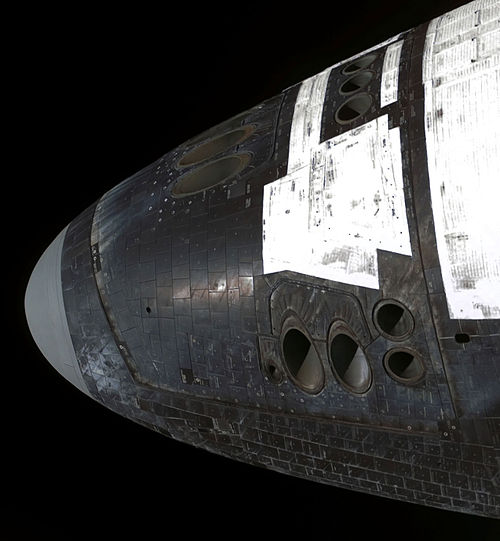
Discovery's forward reaction control thrusters

Cutaway diagram of the Space Shuttle's three-level cabin

Space Shuttle glass cockpit (simulated, composite image)