Nuestra Señora de la Santísima Trinidad, nicknamed La Real, was a ship of the line of the Spanish Navy which was the largest warship in the world when launched. She originally mounted 112 guns, which
1913 illustration of Nuestra Señora de la Santísima Trinidad


Infante don Pelayo going to rescue Nuestra Señora de la Santísima Trinidad at Battle of Cape St. Vincent

HMS Terpsichore attacking Nuestra Señora de la Santísima Trinidad on 1 March 1797

Model of Nuestra Señora de la Santísima Trinidad at the Naval Museum of Madrid
Battle of Trafalgar
Videos
The Battle of Trafalgar was a fleet action which took place on 21 October 1805 between the Royal Navy and a combined fleet of the French and Spanish navies during the War of the Third Coalition. As pa
Spanish ship Nuestra Señora de la Santísima Trinidad
…bore the most guns of any ship of the line outfitted in the Age of Sail. Santísima Trinidad was captured by the Royal Navy on 21 October 1805 at the Battle of Trafalgar but was scuttled the next day. Nuestra Señora de la Santísima Trinidad was built at Havana, Cuba, being laid down in October 1767. She was designed by…
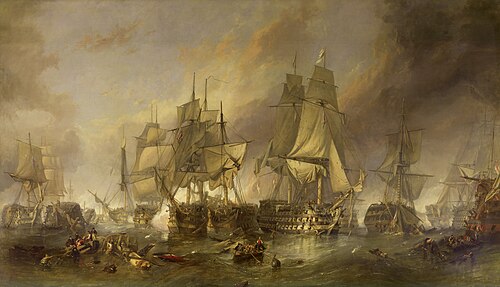
The Battle of Trafalgar Clarkson Frederick Stanfield, 1836

Vice Admiral Horatio, Lord Nelson, by Lemuel Francis Abbott

Vice Admiral Cuthbert Collingwood

Pierre-Charles Villeneuve, the French admiral