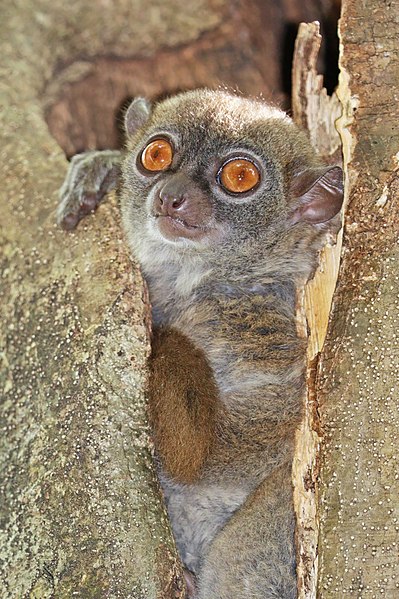
The sportive lemurs are the medium-sized primates that make up the family Lepilemuridae. The family consists of only one extant genus, Lepilemur. They are closely related to the other lemurs and exclusively live on the island of Madagascar. For a time, this family was named Megaladapidae, but the current name was given precedence since the extinct genus Megaladapis was removed from the family.
Sportive lemur
Primates is an order of mammals, which is further divided into the strepsirrhines, which include lemurs, galagos, and lorisids; and the haplorhines, which include tarsiers; and the simians, which include monkeys and apes. Primates arose 85–55 million years ago first from small terrestrial mammals, which adapted for life in tropical forests: many primate characteristics represent adaptations to the challenging environment among tree tops, including large brain sizes, binocular vision, color vision, vocalizations, shoulder girdles allowing a large degree of movement in the upper limbs, and opposable thumbs that enable better grasping and dexterity. Primates range in size from Madame Berthe's mouse lemur, which weighs 30 g (1 oz), to the eastern gorilla, weighing over 200 kg (440 lb). There are 376–524 species of living primates, depending on which classification is used. New primate species continue to be discovered: over 25 species were described in the 2000s, 36 in the 2010s, and six in the 2020s.
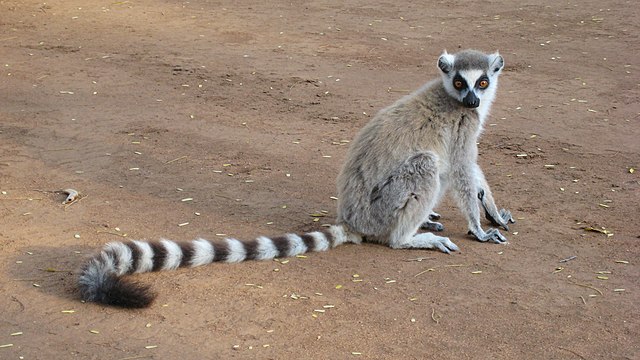
Image: Lemur catta 001
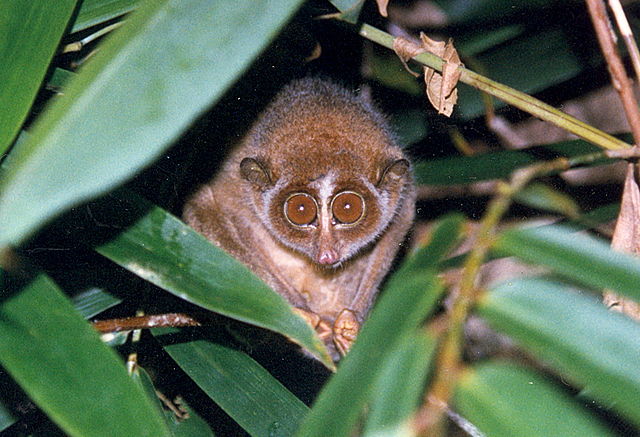
Image: Loris tardigradus tardigradus 003
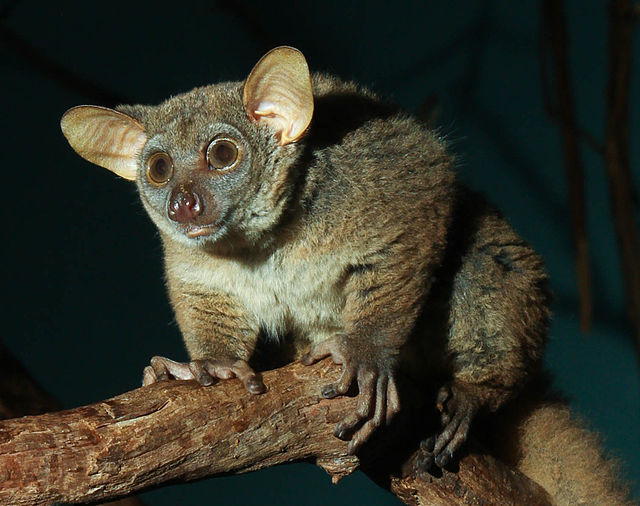
Image: Garnett's Galago (Greater Bushbaby)
Image: Bohol Tarsier