Squib-class torpedo boat
Videos
The Squib class torpedo boats were built for the Confederate States Navy during the later stages of the American Civil War. After the torpedo boat CSS David attacked and damaged the ironclad USS New Ironsides, the Confederates continued building torpedo boats with hopes of breaking the Union blockade. Four vessels of the class – CSS Hornet, CSS Wasp, CSS Squib, and CSS Scorpion – were constructed in Richmond, Virginia, in 1864. All were armed with a single spar torpedo and were powered by steam engines. Squib damaged the gunboat USS Minnesota in an attack on April 9, 1864, and was later sent to Wilmington, North Carolina, where she was scuttled in February 1865. The other three vessels of the class were all part of the James River Squadron and participated in the Battle of Trent's Reach on the night of January 23 and 24, 1865. Scorpion ran aground during the battle, and was forced downriver and out of control after the tender CSS Drewry exploded on January 24. She was later captured by Union forces and may have been burned. Hornet was sunk in a collision with another vessel on January 27, and Wasp was scuttled on the night of April 2/3, as the Confederates were abandoning Richmond.

Design plans for Squib
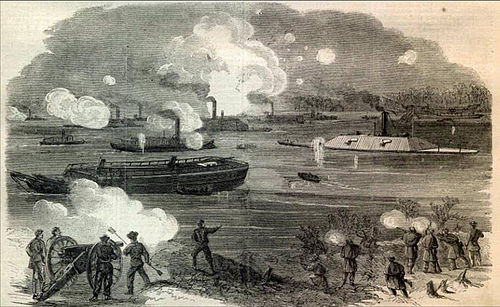
Confederate vessels at the Battle of Trent's Reach
Battle of Trent's Reach
Videos
The Battle of Trent's Reach was one of the final major naval battles of the American Civil War. Beginning on January 23, 1865, a powerful flotilla of Confederate warships bombarded Fort Brady along the James River and engaged four Union Navy ships with the intention of breaking through the blockade to attack City Point, the base of General Ulysses S. Grant who was besieging Petersburg, Virginia. After two days of fighting, the rebels withdrew back up the river without completing their objectives.

CSS Fredericksburg in the James River.

An image from 1865 believed to show the wreck of CSS Drewry in the James River.

CSS Virginia II's smokestack at Fort Brady which was blown off by cannon fire from the Union batteries.