Star
Videos
A star is a luminous spheroid of plasma held together by self-gravity. The nearest star to Earth is the Sun. Many other stars are visible to the naked eye at night; their immense distances from Earth
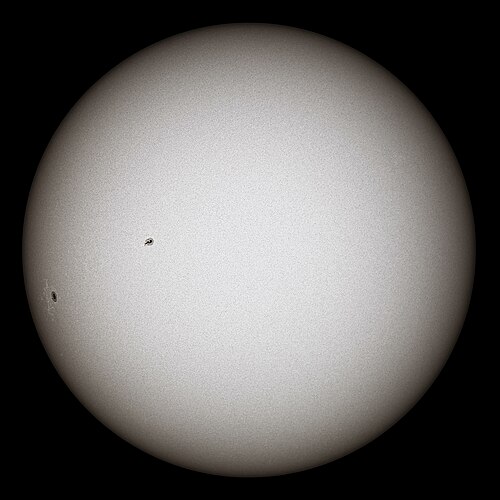
The Sun, a G-type main-sequence star, the closest to Earth

A star-forming region in the Large Magellanic Cloud

Stars in the night sky

Spitzer Space Telescope infrared image showing a multitude of stars in the Milky Way galaxy
Supernova
Videos
A supernova is a powerful and luminous explosion of a star. A supernova occurs during the last evolutionary stages of a massive star, or when a white dwarf is triggered into runaway nuclear fusion. Th
Star
…Stellar nucleosynthesis in stars or their remnants creates almost all naturally occurring chemical elements heavier than lithium. Stellar mass loss or supernova explosions return chemically enriched material to the interstellar medium. These elements are then recycled into new stars. Astronomers can determine…

SN 1994D (bright spot on the lower left), a Type Ia supernova within its host galaxy, NGC 4526

The Crab Nebula is a pulsar wind nebula associated with the 1054 supernova.

A 1414 text cites a 1055 report: since "the baleful star appeared, a full year has passed and until now its brilliance has not faded".

Supernova remnant SNR E0519-69.0 in the Large Magellanic Cloud