Stationary steam engine
Videos
Stationary steam engines are fixed steam engines used for pumping or driving mills and factories, and for power generation. They are distinct from locomotive engines used on railways, traction engines

A stationary steam engine, preserved at Tower Bridge in London. This is one of two tandem cross-compound hydraulic pumping engines formerly used to raise and lower the bridge.

Mill engine, Queen Street Mill, Burnley. William Roberts horizontal tandem compound engine - 'Peace'.

Marshall undertype steam engine

The restored Kittoe and Brotherhood beam engine at Coldharbour, which is steamed up regularly on Bank Holiday weekends.
Watt steam engine
Videos
The Watt steam engine was an invention of James Watt that was a driving force of the Industrial Revolution. According to the Encyclopædia Britannica, it was "the first truly efficient steam engine".
Stationary steam engine
…Newcomen engine (1712) Watt engine (1775) Hornblower (1781…
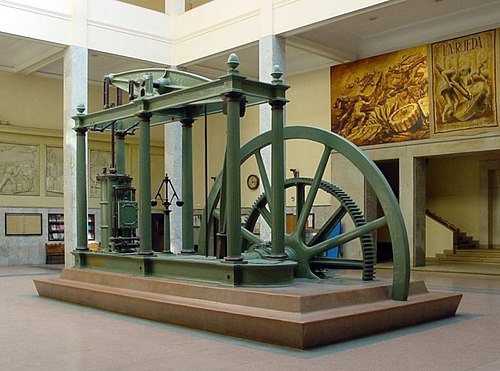
A late version of a Watt double-acting steam engine, built by D. Napier & Son (London) in 1832, now in the lobby of the Superior Technical School of Industrial Engineers of the UPM (Madrid). Steam engines of this kind propelled the Industrial Revolution in Great Britain and the world.
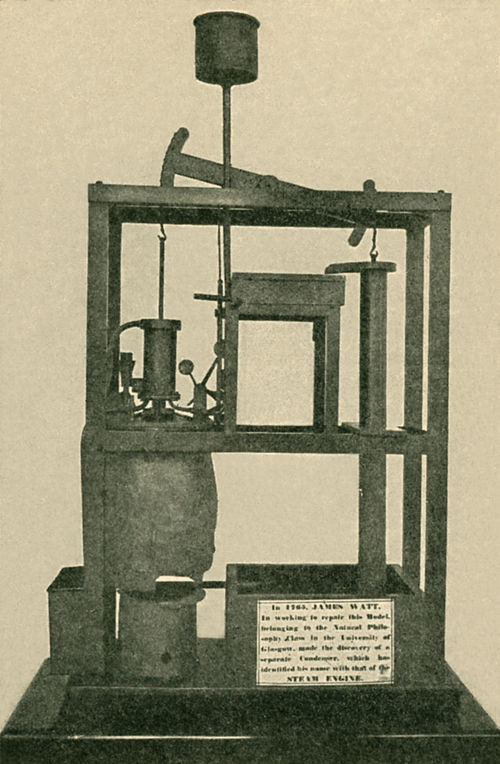
The model Newcomen engine upon which Watt experimented
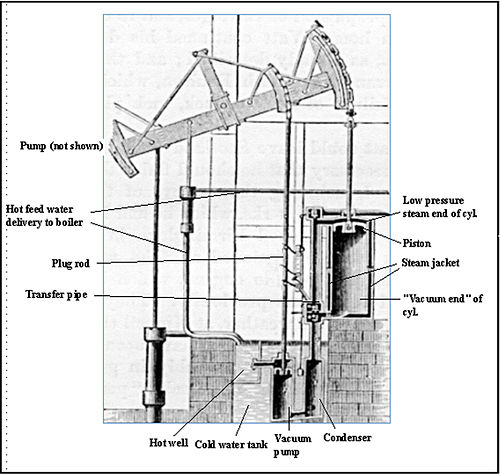
The major components of a Watt pumping engine

Watt's parallel motion on a pumping engine in Freiberg in Germany