Steveston, British Columbia
Videos
For thousands of years the area that is today known as Steveston was home to the Halq’eméylem speaking peoples. Specifically, the area is said to be home to at least two Musqueam villages. One known as qʷeyaʔχʷ was located East of what is today known as Garry Point Park. This community was forced out of their homes due to pressure from the canneries who would replace their homes with fishing camps. The second village, qʷɬeyəm, is believed to have been located North of Moncton Street near Railway Avenue. Today, Musqueam's presence in the history of what is today known as Steveston is heavily underrepresented. As Musqueam Councillor Howard Grant explains, there is "almost nothing with respect to Musqueam people... or First Nations in general." Richmond is currently working to change this as, "recently, city council voted to rebuild the historic First Nations Bunkhouse in Britannia Heritage Shipyards--believed to be the only structure of its kind remaining along B.C.'s coast."

Street scene, Steveston, 1900

Steveston Museum, 2016

Fishing boats, Steveston marina, 2006

Steveston Harbour eastward from Fisherman's Wharf, 2007
From 1942 to 1949, Canada forcibly relocated and incarcerated over 22,000 Japanese Canadians—comprising over 90% of the total Japanese Canadian population—from British Columbia in the name of "national security". The majority were Canadian citizens by birth and were targeted based on their ancestry. This decision followed the events of the Japanese Empire's war in the Pacific against the Western Allies, such as the invasion of Hong Kong, the attack on Pearl Harbor in Hawaii, and the Fall of Singapore which led to the Canadian declaration of war on Japan during World War II. Similar to the actions taken against Japanese Americans in neighbouring United States, this forced relocation subjected many Japanese Canadians to government-enforced curfews and interrogations, job and property losses, and forced repatriation to Japan.

Japanese Canadian evacuation Hastings Park – kindergarten

Lemon Creek Internment camp, June 1944, Slocan Valley, British Columbia (Canada)
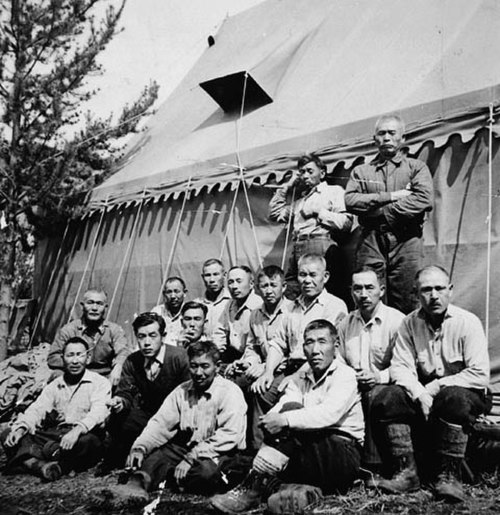
A road crew of interned men building the Yellowhead Highway

The Nikkei Internment Memorial Centre, a National Historic Site of Canada