Still life
Videos
A still life is a work of art depicting mostly inanimate subject matter, typically commonplace objects which are either natural or human-made.

Juan Sánchez Cotán, Still Life with Game Fowl, Vegetables and Fruits (1602), Museo del Prado, Madrid

Still life on a 2nd-century mosaic, with fish, poultry, dates and vegetables from the Vatican museum
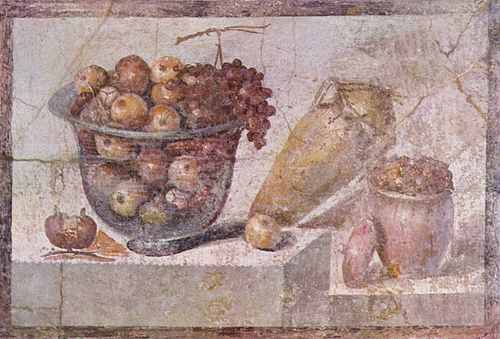
Glass bowl of fruit and vases. Roman wall painting in Pompeii (around 70 AD), Naples National Archaeological Museum, Naples, Italy

Hans Memling (1430–1494), Vase of Flowers (1480), Museo Thyssen-Bornemisza, Madrid. According to some scholars the Vase of Flowers is filled with religious symbolism.
Trompe-l'œil
Videos
Trompe-l'œil is an artistic technique that creates a highly realistic optical illusion of three-dimensional space and objects on a two-dimensional surface. Trompe-l'œil, which is most often associated
Still life
…still-life elements, usually symbolic, and "images that rely on a multitude of still-life elements ostensibly to reproduce a 'slice of life'". The trompe-l'œil painting, which intends to deceive the viewer into thinking the scene is real, is a specialized type of still life, usually showing inanimate and…

Ceiling of the Treasure Room of the Archaeological Museum of Ferrara, Italy, painted in 1503–1506
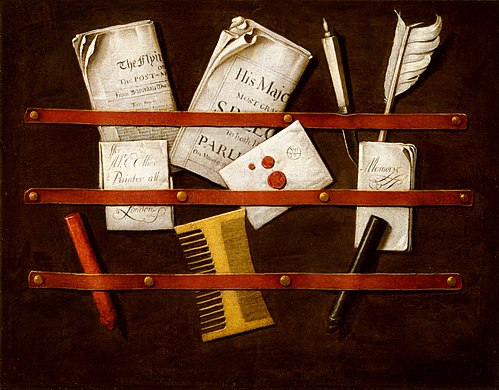
Trompe l'œil with Writing Materials by the Dutch painter Evert Collier

Escaping Criticism by Pere Borrell del Caso, 1874