Stoicism
Videos
Stoicism is a philosophical movement and practical guide to living, emphasizing daily self-discipline and moral improvement, which originated in the Hellenistic period of ancient Greece and proliferat
A bust of Zeno of Citium, considered the founder of Stoicism


Chrysippus, the third leader of the Stoic school, wrote more than 300 books on logic. His works were lost, but an outline of his logical system may be reconstructed from fragments and testimony.

A bust of Seneca, a Stoic philosopher from the Roman Empire who served as an adviser to Nero

Marcus Aurelius, the Stoic Roman emperor
Seneca the Younger
Videos
Lucius Annaeus Seneca the Younger, usually known mononymously as Seneca, was a Stoic philosopher of Ancient Rome, a statesman, a dramatist, and in one work, a satirist, from the post-Augustan age of L
Stoicism
…Since then, it has seen revivals, notably in the Renaissance (Neostoicism) and in the contemporary era. Its influence extended to Roman thinkers like Seneca and Epictetus and later influenced Christianity and the Renaissance Neostoicism movement. Stoicism shaped subsequent developments in logic and inspired…
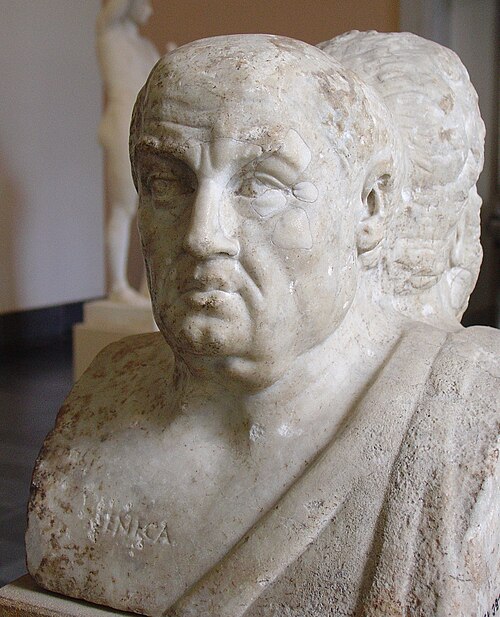
Ancient bust of Seneca, part of the Double Herm of Socrates and Seneca

Modern statue of Seneca in Córdoba
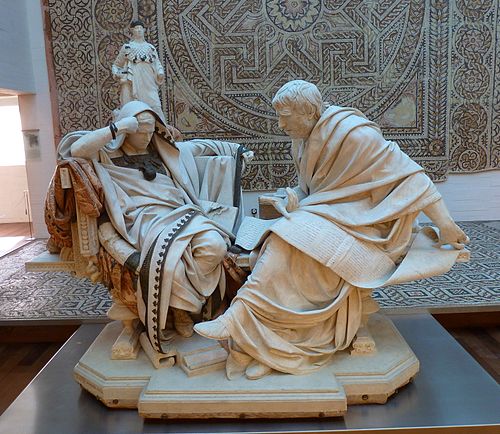
Nero and Seneca, by Eduardo Barrón (1904). Museo del Prado

Death of Seneca by Peter Paul Rubens