Stylus (computing)
Videos
In computing, a stylus is a small pen-shaped instrument whose tip position on a computer monitor can be detected. It is used to draw, or make selections by tapping. While devices with touchscreens suc

several styluses; (l to r) PalmPilot Professional, Fossil Wrist PDA, Nokia 770, Audiovox XV6600, HP Jornada 520, Sharp Zaurus 5500, Fujitsu Lifebook P-1032
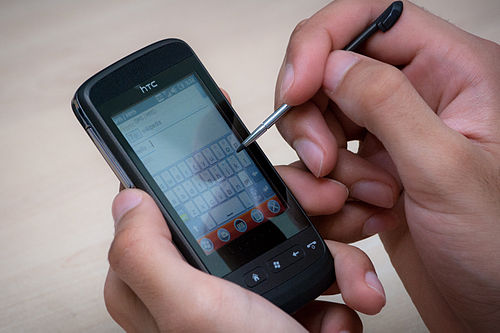
A smartphone being operated with a stylus

Samsung Galaxy Note series of smartphones, as well as Galaxy S22 Ultra, come with an integrated stylus called S-Pen.

An LG Stylo 2 Plus smartphone, with its integrated stylus
Active pen
Videos
An active pen is an input device that includes electronic components and allows users to write directly onto the display of a computing device such as a smartphone, tablet computer or ultrabook. The a
Stylus (computing)
…works by applying pressure to the screen, causing two layers (a conductive and a resistive layer) to make contact. This registers as a touch input. Active pen Digital pen…

A Wacom Bamboo Capture graphics tablet with supplied inductive pen. The crop marks on the surface indicate the active area, which measures 14.7×9.2 cm or 5.8×3.6 in.

Active Pen, natural pressure sensing

N-trig Duosens Pen, inside view

A Wacom digital pen