Superpower
Videos
A superpower is a sovereign state or supranational union that holds a dominant position characterized by the ability to exert influence and project power on a global scale. Although there are no forma

Prime Minister Winston Churchill, President Franklin D. Roosevelt, and General Secretary Joseph Stalin, meeting at the Yalta Conference in Crimea in February 1945, near the end of World War II

Beijing houses the largest number of Fortune Global 500 companies in the world, as well as the world's four biggest financial institutions by total assets, demonstrating China's concentration of corporate, financial, and state directed economic power.

The New York Stock Exchange trading floor. Economic power such as a large nominal GDP and a world reserve currency are important factors in the projection of hard power.
American decline
Videos
American decline is the idea that the United States is diminishing in power on a relative basis geopolitically, militarily, financially, economically, and technologically. It can also refer to absolut
Superpower
…lack of hard power capabilities through a global military alliance system, and the dominance of the U.S. dollar in global trade. At the same time, the perceived decline of the United States has led some to claim it is no longer a superpower, while other sources still consider it a superpower primarily due to its alliances, military capacity…
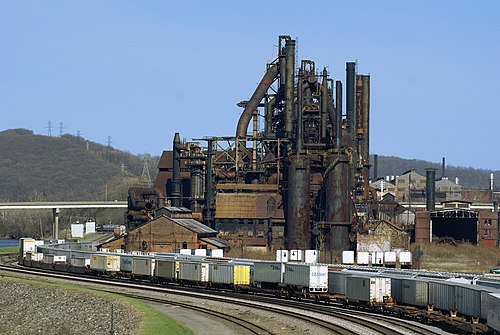
Disused Bethlehem Steel plant in Bethlehem, Pennsylvania. At the height of its success and productivity, the company was a symbol of American manufacturing leadership in the world. The company suspended most of its steelmaking operations in 1982 and declared bankruptcy in 2001; this factory is now part of the Bethlehem Works development site.