Susan Hiller
Videos
Photos
Susan Hiller was a US-born, British conceptual artist who lived in London, United Kingdom. Her practice spanned a broad range of media including installation, video, photography, painting, sculpture, performance, artist's books and writing. A key figure in British art across four decades, she was best known for her innovative large-scale multimedia installations, and for works that took as their subject matter aspects of culture that were overlooked, marginalised, or disregarded, including paranormal beliefs – an approach which she referred to as 'paraconceptualism'.

Susan Hiller, 2006
Conceptual art
Videos
Photos
Conceptual art, also referred to as conceptualism, is art in which the concept(s) or idea(s) involved in the work are prioritized equally to or more than traditional aesthetic, technical, and material concerns. Some works of conceptual art may be constructed by anyone simply by following a set of written instructions. This method was fundamental to American artist Sol LeWitt's definition of conceptual art, one of the first to appear in print:In conceptual art the idea or concept is the most important aspect of the work. When an artist uses a conceptual form of art, it means that all of the planning and decisions are made beforehand and the execution is a perfunctory affair. The idea becomes a machine that makes the art.

Detail, Memorial for the Victims of Nazi Military Justice by monumental sculptor Olaf Nicolai, Ballhausplatz, Vienna
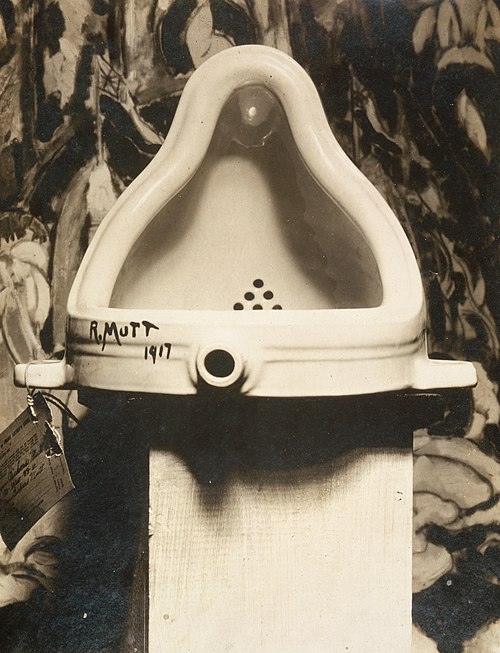
Marcel Duchamp, Fountain, 1917. Photograph by Alfred Stieglitz

Art & Language, Art-Language Vol. 3 Nr. 1, 1974

Lawrence Weiner. Bits & Pieces Put Together to Present a Semblance of a Whole, The Walker Art Center, Minneapolis, 2005.