Tây Sơn dynasty
Videos
The Tây Sơn dynasty, officially Đại Việt, was an imperial dynasty of Vietnam. It originated in a revolt led by three peasant brothers with the surname Nguyễn, rebelling against the Lê dynasty, Trịnh l

Late 18th-century painting depicting the Qianlong Emperor receiving Nguyễn Quang Hiển, the peace envoy from Nguyen Hue in Beijing

Tây Sơn district, where 3 Tây Sơn brothers started their revolution against Nguyễn clan's rule.
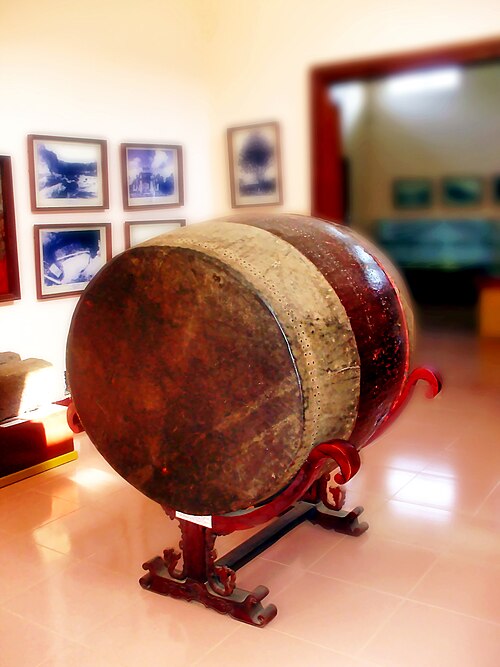
A war drum of the Tây Sơn rebels

An opera house in Phú Yên, 1793
Gia Long
Videos
Gia Long, born Nguyễn Phúc Ánh or Nguyễn Ánh, was the founding emperor of the Nguyễn dynasty, the last dynasty of Vietnam, which would rule the unified territories that constitute modern-day Vietnam u
Tây Sơn dynasty
…at the age of 40 and his successor Cảnh Thịnh, aged 9, was unable to prevent civil conflict among the Tây Sơn court which allowed the last Nguyễn lord Nguyễn Ánh to retake the south of Vietnam, extinguish the Tây Sơn and establish the Nguyễn dynasty. The Tây Sơn dynasty was named after the Tây Sơn district in…

Emperor Gia Long

Pigneau de Behaine (Bá Đa Lộc), the French priest who recruited armies for Nguyễn Phúc Ánh during the war against the Tây Sơn

Portrait of Prince Cảnh, the eldest son of Gia Long, 1787

A painting of Nguyễn Phúc Ánh in audience with King Rama I in Phra Thinang Amarin Winitchai, Bangkok, 1782. Note Phra Thinang Amarin Winitchai did not exist in 1782, it was built in the 19th century