Tachi
Videos
A tachi is a type of sabre-like traditionally made Japanese sword worn by the samurai class of feudal Japan. Tachi and uchigatana generally differ in length, degree of curvature, and how they were wor

Itomaki-no-tachi style sword mounting with chrysanthemum and paulownia crests on nashiji laquer ground. The blade was made by Masatsune. Blade, 12th century; mounting, 18th century. Tokyo National Museum.
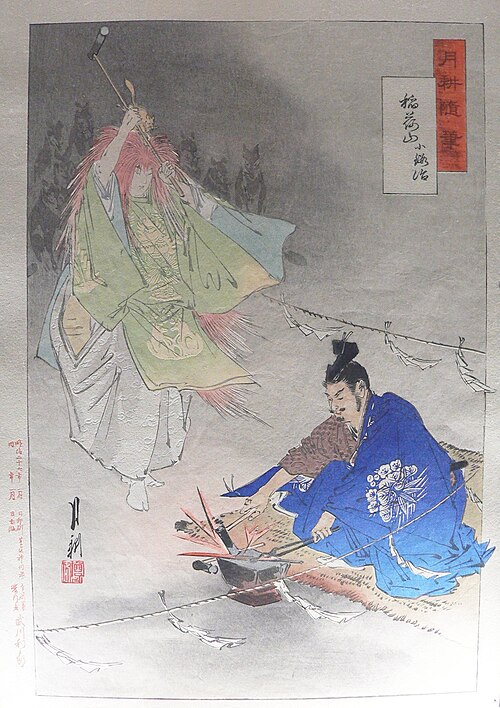
In the noh drama Sanjō Kokaji, the 10th-century blacksmith Munechika, aided by a kitsune (fox spirit), forges the tachi (samurai sword) Ko-Gitsune Maru.

Kenukigata tachi at Ise Grand Shrine, Heian period. Important Cultural Property.
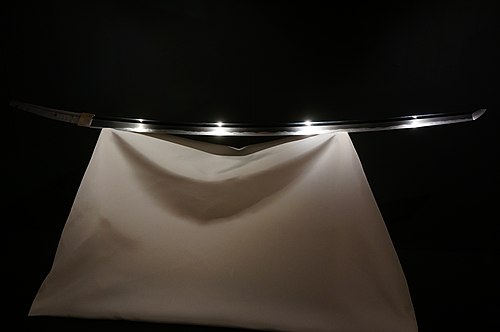
Tachi, Okanehira, by Kanehira. Ko-Bizen (old Bizen) school. 12th century, Heian period, National Treasure, Tokyo National Museum. Okanehira, together with Dojikiri, is considered one of the best Japanese swords in terms of art and is compared to the yokozuna (the highest rank of a sumo wrestler) of Japanese swords.
Katana
Videos
A katana is a Japanese sword characterized by a curved, single-edged blade with a circular or squared guard and long grip to accommodate two hands. Developed later than the tachi, it was used by samur
Tachi
…A tachi (太刀) is a type of sabre-like traditionally made Japanese sword (nihonto) worn by the samurai class of feudal Japan. Tachi and uchigatana ("katana") generally differ in length, degree of curvature, and how they were worn when sheathed, the latter depending on the location of the mei (銘…

A katana modified from a tachi forged by Motoshige. Bizen Osafune school influenced by the Sōshū school. 14th century, Nanboku-chō period. Important Cultural Property. Tokyo National Museum

Mei (signature) and Nakago (tang) of an Edo period katana

A Sōshū school katana modified from a tachi forged by Masamune. As it was owned by Ishida Mitsunari, it was commonly called Ishida Masamune. Important Cultural Property. Tokyo National Museum

A Sōshū school katana modified from a tachi, Kiriha Sadamune, forged by Sadamune, son of Masamune. 14th century, Kamakura period. Important Cultural Property. Tokyo National Museum