Tartarus
Videos
In Greek mythology, Tartarus is the deep abyss that is used as a dungeon of torment and suffering for the wicked and as the prison for the Titans. Tartarus is the place where, according to Plato's Gor
Persephone supervising Sisyphus in the Underworld, Attic black-figure amphora, c. 530 BC


Henryk Siemiradzki Orfeusz w podziemnym królestwie

John Martin 002

Buddhist hell
Titans
Videos
In Greek mythology, the Titans were the deities who preceded the Olympians. According to the Theogony of Hesiod, they were the twelve children of the primordial deities Uranus and Gaia. The six male T
Tartarus
…Greek: Τάρταρος, romanized: Tártaros) is the deep abyss that is used as a dungeon of torment and suffering for the wicked and as the prison for the Titans. Tartarus is the place where, according to Plato's Gorgias (c. 400 BC), souls are judged after death and where the wicked received divine punishment…
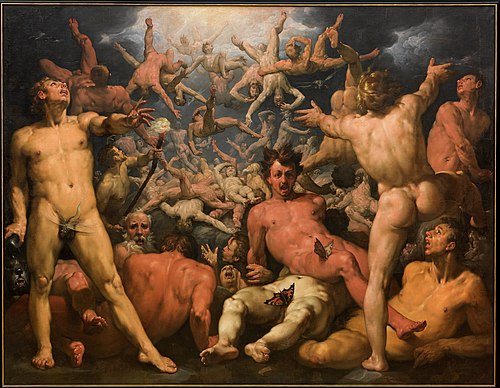
The Fall of the Titans (1596–98), a mythological painting by Dutch painter Cornelis van Haarlem.
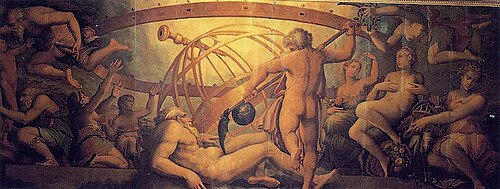
The Mutilation of Uranus by Saturn: fresco by Giorgio Vasari and Cristofano Gherardi, c. 1560 (Sala di Cosimo I, Palazzo Vecchio)

Rhea presenting Cronus the stone wrapped in cloth

"Fall of the Titans". Oil on canvas by Jacob Jordaens, 1638.