Tayma
Videos
Tayma, also spelled Tema, is a Saudi city and governorate, in Tabuk Province, and major oasis with a long history of habitation.

Old Town of Tayma

Aramaic inscription from Tayma Known as the Tayma Stones. (6th century BC.)

Stele with dedicatory Aramaic inscription to the god Salm. Sandstone, 5th century BC. Found in Tayma by Charles Huber in 1884. Now in the Louvre.
Nabonidus
Videos
Nabonidus was the last king of the Neo-Babylonian Empire, ruling from 556 BC to the fall of Babylon to the Achaemenian Empire under Cyrus the Great in 539 BC. Nabonidus was the last native ruler of an
Tayma
…underscoring a continued economical relationship through this time period. In the early sixth century BC, the Babylonian Empire overthrew the Assyrians. Nabonidus (556–539 BC), the empire's last emperor, waged military campaigns against northwestern Arabia, and he used Tayma as his operating base for launching…

Nabonidus, detail of a stele in the British Museum, probably from Babylon, Iraq

Relief of Ashurbanipal, who ruled as king of Assyria 669–631 BC. Nabonidus emulated elements of Ashurbanipal and his dynasty, the Sargonids. Some historians believe that Nabonidus was a descendant of Ashurbanipal, or Ashurbanipal's father Esarhaddon.
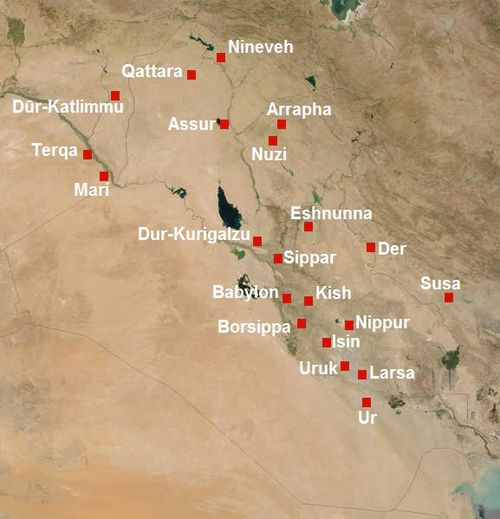
Locations of some major Mesopotamian cities

Nabonidus as depicted in a stele from Harran