Tenka-Goken
Videos
The Tenka-Goken are a group of five Japanese swords. Three are National Treasures of Japan, one an Imperial Property, and one a holy relic of Nichiren Buddhism. Among the five, some regard Dōjigiri as

Dojikiri Yasutsuna

Onimaru Kunitsuna

Mikazuki Munechika
Tachi
Videos
A tachi is a type of sabre-like traditionally made Japanese sword worn by the samurai class of feudal Japan. Tachi and uchigatana generally differ in length, degree of curvature, and how they were wor
Tenka-Goken
…Signature Bladesmith Classification Note Dōjigiri (童子切; "Slayer of Shuten-dōji") 安綱 Hōki-no-Kuni Yasutsuna (伯耆国安綱) National Treasure 10–12th century. Tachi. Length 80.0 cm, curvature 2.7 cm. Owned by Tokyo National Museum. Legends say Minamoto no Yorimitsu killed the monster Shuten-dōji with this sword…

Itomaki-no-tachi style sword mounting with chrysanthemum and paulownia crests on nashiji laquer ground. The blade was made by Masatsune. Blade, 12th century; mounting, 18th century. Tokyo National Museum.
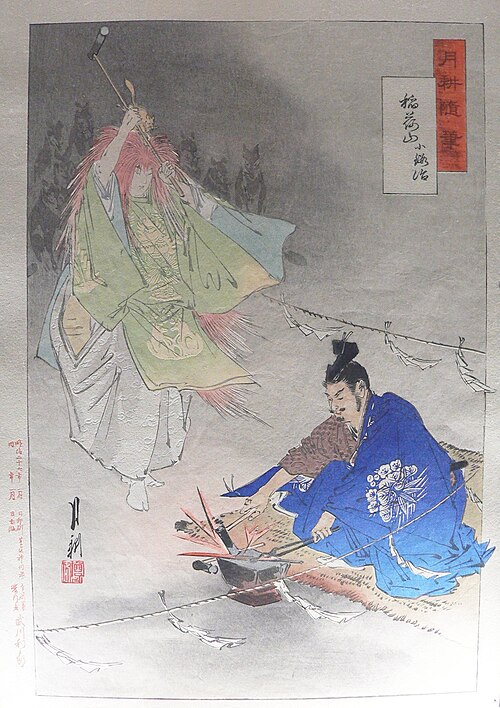
In the noh drama Sanjō Kokaji, the 10th-century blacksmith Munechika, aided by a kitsune (fox spirit), forges the tachi (samurai sword) Ko-Gitsune Maru.

Kenukigata tachi at Ise Grand Shrine, Heian period. Important Cultural Property.
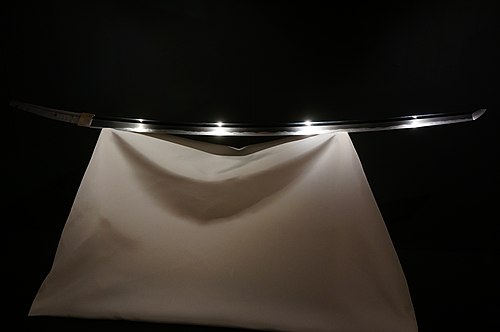
Tachi, Okanehira, by Kanehira. Ko-Bizen (old Bizen) school. 12th century, Heian period, National Treasure, Tokyo National Museum. Okanehira, together with Dojikiri, is considered one of the best Japanese swords in terms of art and is compared to the yokozuna (the highest rank of a sumo wrestler) of Japanese swords.