The Buddha
Videos
Siddhartha Gautama, most commonly referred to as the Buddha, was a wandering religious teacher who lived in the eastern Indo-Gangetic Plains during the 6th or 5th century BCE and founded Buddhism. Acc
Sculpture of the Buddha preaching his first sermon from Sarnath, 5th century CE


The Buddha, Tapa Shotor monastery in Hadda, Afghanistan, 2nd century CE

The "Isapur Buddha", probably the earliest known representation of the Buddha (possibly together with the Butkara seated Buddha statue at the Butkara Stupa, Swat), on a railing post, dated to circa 15 CE.

The Relic Stupa of Vaishali, 5th century BCE which held either the Buddha's ashes or part of his relics
Shakya
Videos
Shakya was an ancient Indo-Aryan tribe of north-eastern South Asia whose existence is attested during the Iron Age. The Shakyas were organised into a gaṇasaṅgha, known as the Shakya Republic. The Shak
The Buddha
…the 6th or 5th century BCE and founded Buddhism. According to Buddhist legends, he was born in Lumbini, in what is now Nepal, to royal parents of the Shakya clan, but renounced his home life to live as a wandering ascetic. After leading a life of mendicancy, asceticism, and meditation, he attained nirvana…
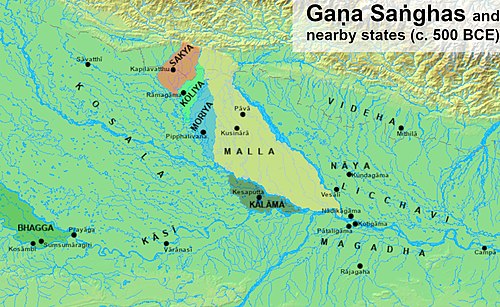
Shakya among the Gaṇasaṅghas

Siddhartha Gautama, called Shakyamuni "Sage of the Shakyas", the most famous Shakya. Seated bronze from Tibet, 11th century.

The words Budhe and Sakyamunī "Sage of the Shakyas" in Brahmi script, on Ashoka's Minor Pillar Edict of Lumbini (circa 250 BCE).

Bharhut inscription: Bhagavato Sakamunino Bodho "The illumination of the Blessed Sakamuni", circa 100 BCE.