The Cabinet of Dr. Caligari
Videos
The Cabinet of Dr. Caligari is a 1920 German silent horror film directed by Robert Wiene and written by Hans Janowitz and Carl Mayer. The quintessential work of early German Expressionist cinema, it t
Theatrical release poster

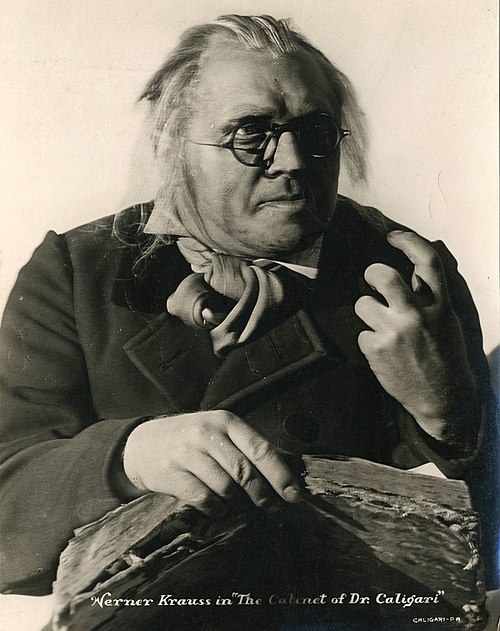
Werner Krauss as Caligari, 1920

The designers of The Cabinet of Dr. Caligari chose a fantastic, graphic visual style instead of a naturalistic one; this included twisted city scenes that were painted directly onto canvases.

Werner Krauss, who portrayed Caligari, suggested changes to his own make-up and costumes so they would match the film's Expressionist style.
Werner Krauss
Videos
Werner Johannes Krauss was a German stage and film actor. Krauss dominated the German stage of the early 20th century. However, his participation in the antisemitic propaganda film Jud Süß and his col
The Cabinet of Dr. Caligari
…Wiene and written by Hans Janowitz and Carl Mayer. The quintessential work of early German Expressionist cinema, it tells the story of a hypnotist (Werner Krauss) who uses a somnambulist Cesare (Conrad Veidt) to commit murders. The film features a dark, twisted visual style, with sharp-pointed forms; oblique…

Krauss about 1920

Werner Krauß in 'Dantons Tod'

Werner Krauss