The Magic Flute
Videos
The Magic Flute, K. 620, is an opera in two acts by Wolfgang Amadeus Mozart to a German libretto by Emanuel Schikaneder. It is a Singspiel, a popular form that included both singing and spoken dialogu

The arrival of the Queen of the Night. Stage set by Karl Friedrich Schinkel for an 1815 production.

Emanuel Schikaneder, librettist of Die Zauberflöte, as Papageno

Baritone Markus Werba appearing as Papageno. He wears his pipes and carries his magic bells; both instruments are essential to the plot.

Playbill for the premiere
Wolfgang Amadeus Mozart
Videos
Wolfgang Amadeus Mozart was a Classical composer and musician. He completed more than 800 works in his life—including outstanding examples of most of the genres of his time: symphonies, concertos, cha
The Magic Flute
…The Magic Flute (German: Die Zauberflöte, pronounced ), K. 620, is an opera in two acts by Wolfgang Amadeus Mozart to a German libretto by Emanuel Schikaneder. It is a Singspiel, a popular form that included both singing and spoken dialogue. The work premiered on…

Detail from Portrait of the Mozart Family, c. 1781

Mozart's birthplace at Getreidegasse 9, Salzburg
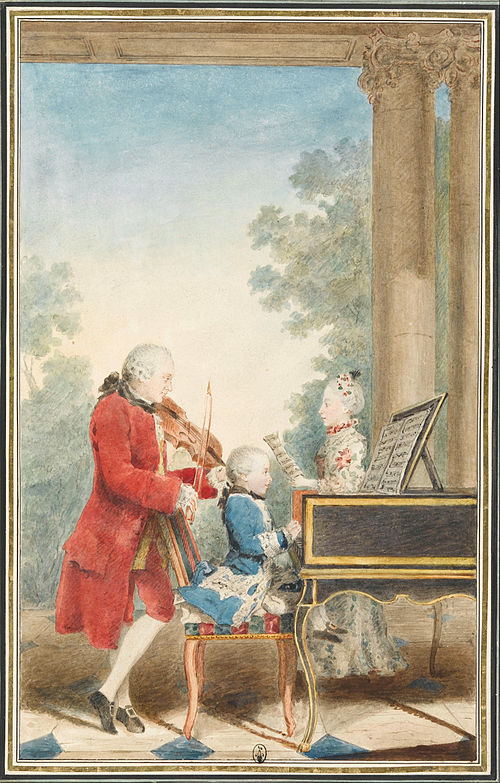
Mozart family on tour: Leopold, Wolfgang, Nannerl; watercolour by Carmontelle, c. 1763
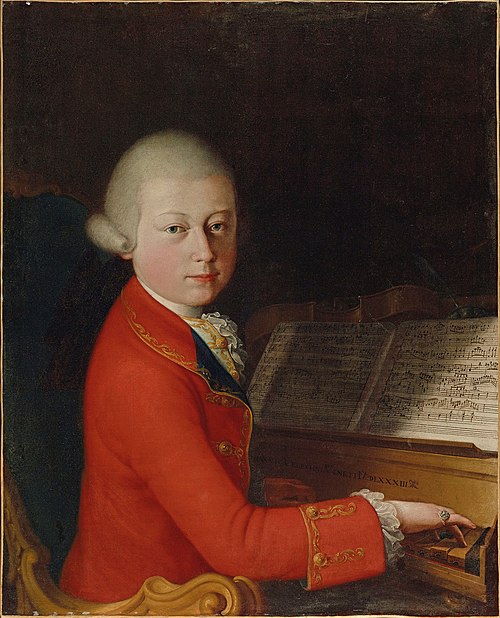
Mozart aged 14 in January 1770 (School of Verona, attributed to Giambettino Cignaroli)