Theaetetus (dialogue)
Videos
The Theaetetus is a philosophical work written by Plato in the early-middle 4th century BCE that investigates the nature of knowledge, and is considered one of the founding works of epistemology. Like
Protagoras, shown at the right with Democritus, was famous for the quote "Man is the measure of all things" and argued that knowledge was obtained from the senses.


Socrates recounts the tale of the philosopher who was so caught up in looking at the stars that he fell into a well.

Socrates Pio Clementino Inv 314
Plato
Videos
Plato was an ancient Greek philosopher of Classical Athens who is most commonly considered the foundational thinker of the Western philosophical tradition. An innovator of the literary dialogue and di
Theaetetus (dialogue)
…The Theaetetus (; Greek: Θεαίτητος Theaítētos, lat. Theaetetus) is a philosophical work written by Plato in the early-middle 4th century BCE that investigates the nature of knowledge, and is considered one of the founding works of epistemology. Like many…

Plato was one of the devoted young followers of Socrates, whose bust is pictured above.

Heraclitus (1628) by Hendrick ter Brugghen. Heraclitus saw a world in flux, with everything always in conflict, constantly changing.

Bust of Parmenides from Velia. Parmenides saw the world as eternal and unchanging, that all change was an illusion.
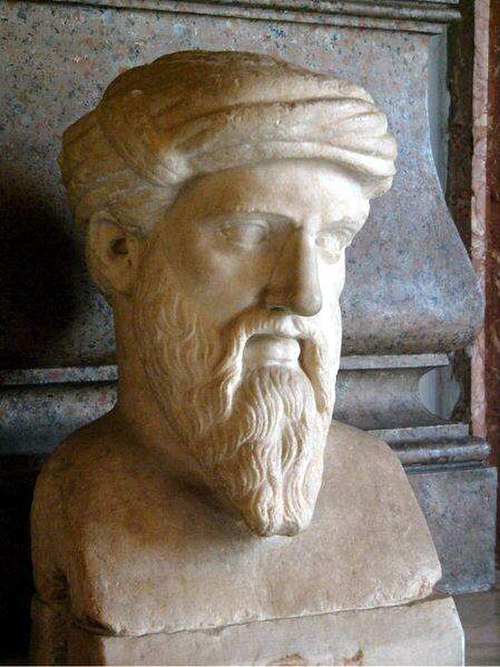
The mathematical and mystical teachings of the followers of Pythagoras, pictured above, exerted a strong influence on Plato.