Theodosius II
Videos
Theodosius II, called "the Calligrapher", was Roman emperor from 402 to 450. He was proclaimed Augustus as an infant and ruled as the Eastern Empire's sole emperor after the death of his father Arcadi
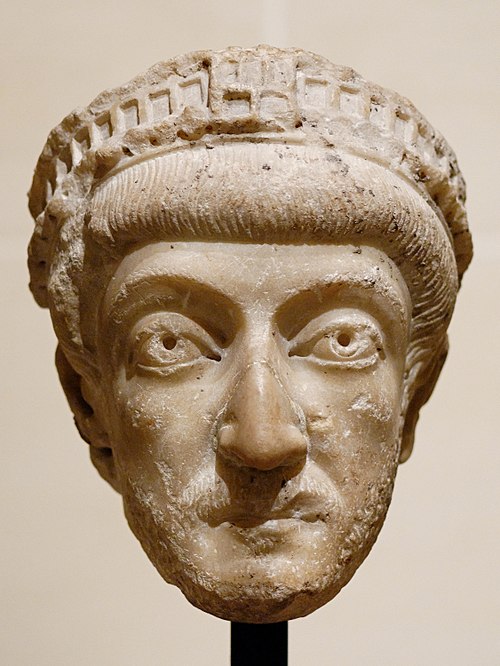
Bust of Theodosius II in the Louvre

Solidus of Theodosius, minted in Constantinople c. 435

Theodosius receives the Phrygian Apple and inquisits Eudocia about it. A scene from the 14th century Manasses Chronicle.

Theodosius welcomes the relics of John Chrysostom; miniature from the early 11th century
Marcian
Videos
Marcian was Roman emperor of the East from 450 to 457. Very little is known of his life before becoming emperor, other than that he was a domesticus who served under the commanders Ardabur and his son
Theodosius II
…held a year after his death in 450. Theodosius died on 28 July 450 as the result of falling off his horse. On 25 November, his sister Pulcheria married Marcian, a domesticus under the influential general Aspar, and he became emperor. The eunuch Chrysaphius was executed or murdered shortly after by the new…

Emperor Theodosius II

Fourth Ecumenical Council of Chalcedon, 1876 painting by Vasily Surikov

A detail of the Missorium of Aspar, depicting Aspar and his elder son Ardabur (c. 434).

Death of Marcian, who is succeeded by Leo I (right). Scene from the 12th century Manasses Chronicle.