Thiess of Kaltenbrun
Videos
Thiess of Kaltenbrunn, also spelled Thies, and commonly referred to as the Livonian werewolf, was a Livonian man who was put on trial for heresy in Jürgensburg, Swedish Livonia, in 1692. At the time i
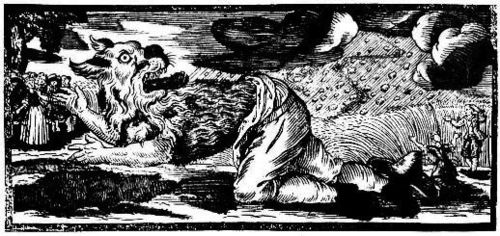
A German woodcut of a werewolf from 1722. Thiess claimed to be a werewolf, although he asserted that in doing so he served God rather than the Devil, in contrast to common werewolf beliefs of the time.
The Night Battles
Videos
The Night Battles: Witchcraft and Agrarian Cults in the Sixteenth and Seventeenth Centuries is a historical study of the benandanti folk custom of 16th- and 17th-century Friuli, Northeastern Italy. It
Thiess of Kaltenbrun
…Various historians have turned their attention towards the case of Thiess, interpreting his werewolf beliefs in a variety of different ways. In his book The Night Battles (1966), the Italian historian Carlo Ginzburg compared Thiess' practices to those of the benandanti of northeastern Italy, and argued that they represented…

The nocturnal visionary tradition of the benandanti led the Roman Inquisition to accuse them of being witches, malevolent Satanists depicted in this 1508 woodcut

Ronald Hutton asserted that Ginzburg's approach in The Night Battles was "heavily Frazerian", being based on the theories of Scottish anthropologist Sir James Frazer (1854–1941), themselves widely discredited in the field of anthropology.