Thomas Sydenham
Videos
Photos
Thomas Sydenham was an English physician. He was the author of Observationes Medicae (1676) which became a standard textbook of medicine for two centuries so that he became known as 'The English Hippocrates'. Among his many achievements was the discovery of a disease, Sydenham's chorea, also known as St Vitus' Dance. To him is attributed the prescient dictum, "A man is as old as his arteries."

Thomas Sydenham in a 1689 portrait by Mary Beale.

Engraving by Abraham Blooteling after the Mary Beale portrait; published as the frontispiece in a later edition of his Observationes medicinae

Opera medica
Hippocrates
Videos
Photos
Hippocrates of Kos, also known as Hippocrates II, was a Greek physician of the classical period who is considered one of the most outstanding figures in the history of medicine. He is traditionally referred to as the "Father of Medicine" in recognition of his lasting contributions to the field, such as the use of prognosis and clinical observation, the systematic categorization of diseases, and the formulation of humoral theory. The Hippocratic school of medicine revolutionized ancient Greek medicine, establishing it as a discipline distinct from other fields with which it had traditionally been associated, thus establishing medicine as a profession.
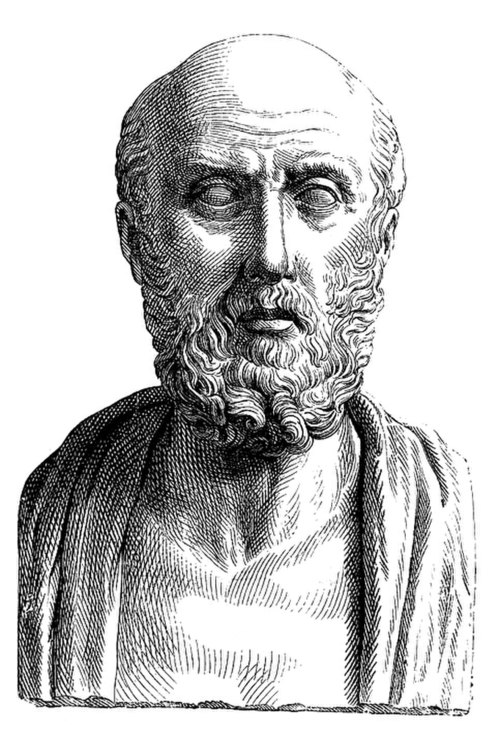
A conventionalized image in a Roman "portrait" bust (19th-century engraving)

Illustration of the story of Hippocrates refusing the presents of the Achaemenid Emperor Artaxerxes, who was asking for his services. Painted by Girodet, 1792.

Asklepieion on Kos

A number of ancient Greek surgical tools. On the left is a trephine; on the right, a set of scalpels. Hippocratic medicine made good use of these tools.