Thomas the Slav
Videos
Thomas the Slav was a 9th-century Byzantine military commander, most notable for leading a wide-scale revolt in 821–823 against Emperor Michael II the Amorian.
Miniature from the Madrid Skylitzes version of the chronicle of John Skylitzes depicting Thomas, on horseback and dressed as a Byzantine emperor, negotiating with the Arabs. The rebellion of Thomas is one of the most richly illustrated episodes in the chronicle.

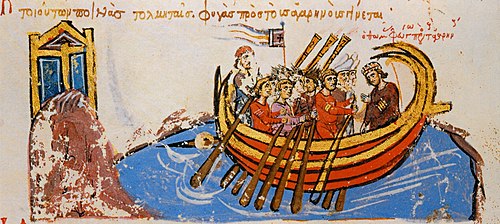
Miniature from the Madrid Skylitzes depicting Thomas's supposed flight to the Arabs
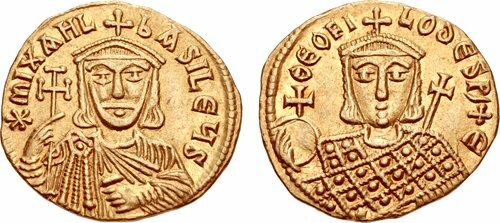
Gold solidus of Michael II with his son, Theophilos
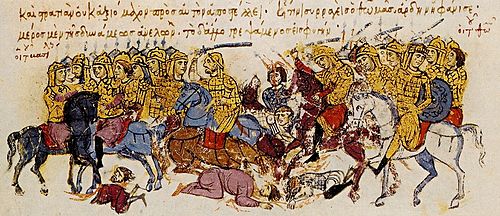
Thomas's troops defeat the forces loyal to Michael II. Miniature from the Madrid Skylitzes.
Greek fire
Videos
Greek fire was an incendiary weapon used by the Byzantine Empire from the seventh to the fourteenth centuries. The recipe for Greek fire was a closely-guarded state secret and has been lost to history
Thomas the Slav
…defenses protecting Blachernae. All of Thomas's forces were amply supplied with siege engines and catapults, and his fleet fielded quantities of Greek fire in addition to large shipborne catapults. Each of Thomas's attacks failed: the defenders' artillery proved superior and kept Thomas's engines away from…
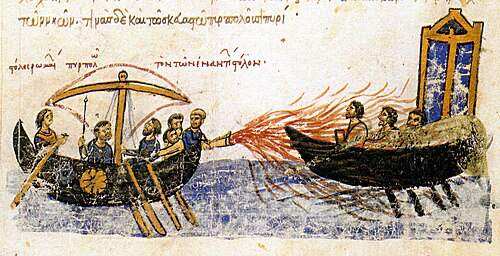
"The Roman fleet burns the opposite fleet down" – An Eastern Roman / Byzantine warship using their "secret weapon" Greek fire against a ship belonging to the rebel Thomas the Slav, AD 821. (12th century illustration from the "Madrid Skylitzes").

Use of a cheirosiphōn ("hand-siphōn"), a portable flamethrower, used from a flying bridge against a castle. Illumination from the Poliorcetica of Hero of Byzantium.

Proposed reconstruction of the Greek fire mechanism by Haldon and Byrne

Detail of a cheirosiphōn