Three Alls policy
Videos
The Three Alls policy was the Japanese scorched-earth policy adopted in China during World War II, the three "alls" being "kill all, burn all, loot all". This policy was designed as retaliation agains
General Yasuji Okamura, one of the main perpetrators of the Three Alls Policy.

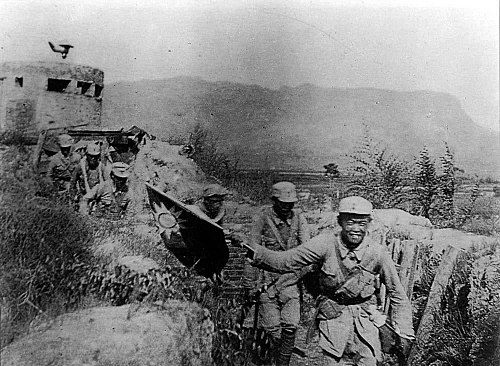
Chinese Communist soldiers, one brandishing a Republic of China banner, storm a Japanese position during the Hundred Regiments Offensive, 1940.
Japanese war crimes
Videos
Both before and during World War II, the Empire of Japan committed numerous war crimes and crimes against humanity across various Asian–Pacific nations, most notably during the Second Sino-Japanese an
Three Alls policy
…三光、日本人の中国における戦争犯罪の告白, Sankō, Nihonjin no Chūgoku ni okeru sensō hanzai no kokuhaku) (new edition: Kanki Haruo, 1979) in which Japanese veterans confessed to war crimes committed under the leadership of General Yasuji Okamura. The publishers were forced to stop the publication of the book after they had received death…

Bodies of victims along the Qinhuai River, out of Nanjing's west gate during the Nanjing Massacre

Japanese troops burying living Chinese civilians

Samurai warriors of the Chosyu clan, during the Boshin War period of the 1860s

Two Japanese commanders, Toshiaki Mukai and Tsuyoshi Noda competing to see who could kill (with a sword) one hundred people first. The headline reads, "'Incredible Record' (in the Contest to Decapitate 100 People)—Mukai 106 – 105 Noda—Both 2nd Lieutenants Go Into Extra Innings".