Tianqi Emperor
Videos
The Tianqi Emperor, personal name Zhu Youjiao, was the 16th and penultimate emperor of the Ming dynasty of China, reigning from 1620 to 1627. He succeeded his father, the Taichang Emperor.
Palace portrait on a hanging scroll

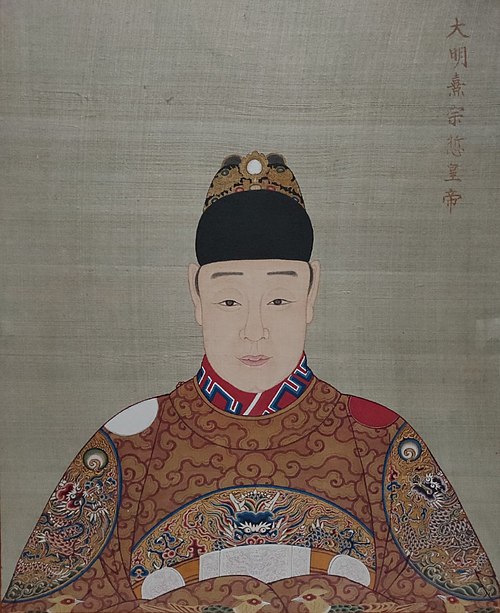
Portrait of Xizong, Emperor Zhe in The Palace Museum
Palace of Heavenly Purity
Videos
The Palace of Heavenly Purity, or Qianqing Palace is a palace in the Forbidden City in Beijing, China. It is the largest of the three halls of the Inner Court, located at the northern end of the Forbi
Tianqi Emperor
…September 1627 Enthronement 1 October 1620 Predecessor Taichang Emperor Successor Chongzhen Emperor Born 23 December 1605 Died 30 September 1627 (aged 21) Palace of Heavenly Purity, Forbidden City, Ming dynasty Burial De Mausoleum, Ming tombs, Beijing Spouse Empress Xiao'aizhe (m. 1621) Era dates Tianqi: 22 January 1621 – 4 February…

Exterior view of the Palace of Heavenly Purity

Gate of Heavenly Purity and Palace of Heavenly Purity in Qianlong Emperor's era, 1750s in winter.

Throne in the Palace of Heavenly Purity

Gate of Heavenly Purity and Palace of Heavenly Purity in Qianlong Emperor's era, 1750s in summer.