Tibet under Qing rule
Videos
The Qing dynasty, led by the Manchus, ruled Tibet from 1720 to 1912. The Qing called Tibet a fanbu, fanbang or fanshu, which has usually been translated as "vassal", "vassal state", or "borderlands",
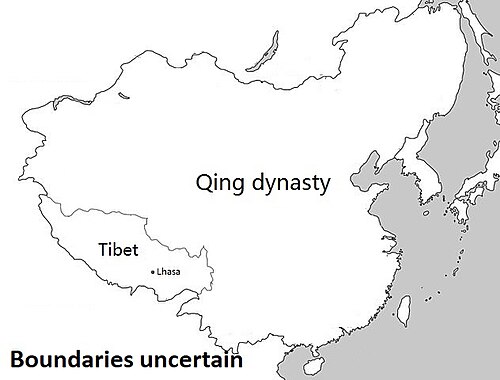
Qing dynasty and Tibet

Lhazang Khan

Lungtok Gyatso, 9th Dalai Lama, with lamas and monks, and ambans inattendance, around 1808.

Lhasa Amban's yamen from Southeast around 1900–1901.
Tibet
Videos
Tibet is a region in the western part of East Asia, covering much of the Tibetan Plateau. It is the homeland of the Tibetans. Other ethnic groups also reside on the plateau, including Mongols, the Lho
Tibet under Qing rule
…The Qing dynasty, led by the Manchus, ruled Tibet from 1720 to 1912. The Qing called Tibet a fanbu, fanbang or fanshu, which has usually been translated as "vassal", "vassal state", or "borderlands…

Greater Tibet regions and claims; click image and go to 'More details' to understand more about the various colours

Tibetan family in Kham attending a horse festival

Rishabhanatha, the first Tirthankara of Jainism, is considered to have attained nirvana near Mount Kailash in Tibet in Jain tradition.

King Songtsen Gampo