Tibetan macaque
Videos
Photos
The Tibetan macaque, also known as the Chinese stump-tailed macaque or Milne-Edwards' macaque, is a macaque species found from eastern Tibet east to Guangdong and north to Shaanxi in China. It has also been reported from northeastern India. This species lives in subtropical forests at elevations from 800 to 2,500 m above sea level.

Tibetan macaque

Male Tibetan macaque.

Female Tibetan macaque breastfeeding infant.

Young Tibetan macaque.
Macaque
Videos
Photos
The macaques constitute a genus (Macaca) of gregarious Old World monkeys of the subfamily Cercopithecinae. The 23 species of macaques inhabit ranges throughout Asia, North Africa, and Europe. Macaques are principally frugivorous, although their diet also includes seeds, leaves, flowers, and tree bark. Some species such as the long-tailed macaque will supplement their diets with small amounts of meat from shellfish, insects, and small mammals. On average, a southern pig-tailed macaque in Malaysia eats about 70 large rats each year. All macaque social groups are arranged around dominant matriarchs.

Macaque

The premotor cortex of macaques is widely studied.

M. fascicularis on a scooter at Ko Chang, Thailand
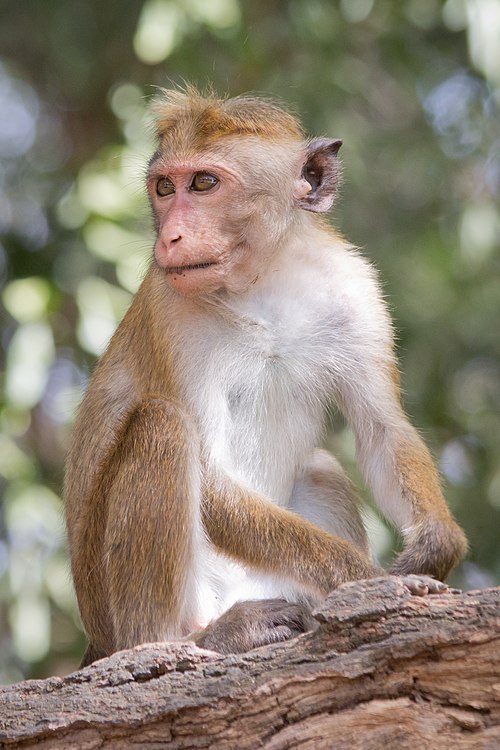
Image: Macaca sinica 01