Time ball
Videos
A time ball is a large, wooden or metal ball that moves up and down a pole, and which is dropped at a predetermined time of day. Because precise timekeeping is essential to the determination of longit
A time ball, installed in 1833, atop the Octagon Room at the Royal Observatory, Greenwich, London


The Boston Time Ball (1881)

Sydney Observatory with time ball

The time ball at Port Lyttelton, New Zealand, started signalling Greenwich Mean Time to ships in the harbour beginning in 1876. The Lyttelton Timeball Station was destroyed by an earthquake in 2011 but was rebuilt and reopened in 2018.
Marine chronometer
Videos
A marine chronometer is a precision timepiece that is carried on a ship and employed in the determination of the ship's position by celestial navigation. It is used to determine longitude by comparing
Time ball
…essential to the determination of longitude at sea, time balls were principally erected to allow navigators aboard nearby ships to synchronize their marine chronometers with a reference time standard controlling the ball. Time balls have been rendered obsolete by electronic time signals, but some are kept in operation…

A marine chronometer by Charles Frodsham of London, shown turned upside down to reveal the movement. Chronometer circa 1844–1860.

The marine "Chronometer" of Jeremy Thacker used gimbals and a vacuum in a bell jar.
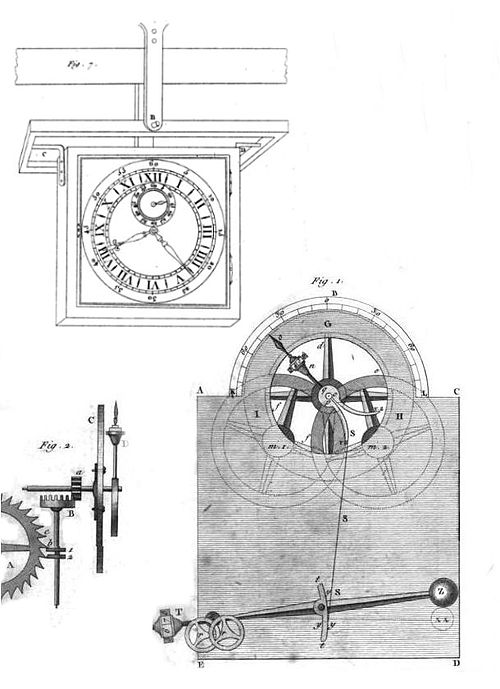
Henry Sully (1680–1729) presented a first marine chronometer in 1716

John Harrison's H1 marine chronometer of 1735