Timucua
Videos
The Timucua were a Native American people who lived in Northeast and North Central Florida and southeast Georgia. They were the largest indigenous group in that area and consisted of about 35 chiefdom

One of the engravings based on Jacques le Moyne's drawings, depicting Athore, son of the Timucuan chief Saturiwa, showing René Laudonnière a monument placed by Jean Ribault

Timucuan Ecological and Historic Preserve and Fort Caroline National Memorial

Timucuan village and inhabitants depicted on a painting in the United States Capitol
Jacksonville, Florida
Videos
Jacksonville, colloquially nicknamed Jax, is the most populous city proper in the U.S. state of Florida, located on the Atlantic coast of northeastern Florida. It is the seat of government of Duval Co
Timucua
…Timucua" (recorded by the French as Thimogona but this is likely a misprint for Thimogoua) came from the exonym used by the Saturiwa (of what is now Jacksonville) to refer to the Utina, another group to the west of the St. Johns River. The Spanish came to use the term more broadly for other peoples in the area…

Jacksonville skyline
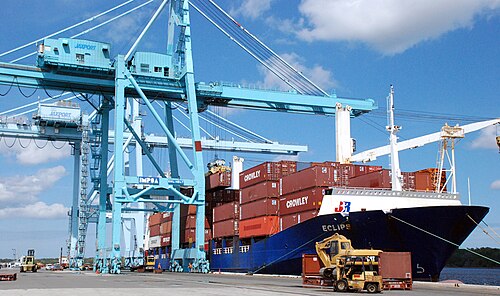
Eclips at Talleyrand Marine Terminal

Long bridge

Jacksonville Terminal Complex, FL, US