Tommy "Tucker" Lyttle, was a high-ranking Ulster loyalist during the period of religious-political conflict in Northern Ireland known as "the Troubles". A member of the Ulster Defence Association (UDA) – the largest loyalist paramilitary organisation in Northern Ireland – he first held the rank of lieutenant colonel and later was made a brigadier. He served as the UDA's spokesman as well as the leader of the organisation's West Belfast Brigade from 1975 until his arrest and imprisonment in 1990. According to journalists Henry McDonald and Brian Rowan, and the Pat Finucane Centre, he became a Royal Ulster Constabulary (RUC) Special Branch informer.
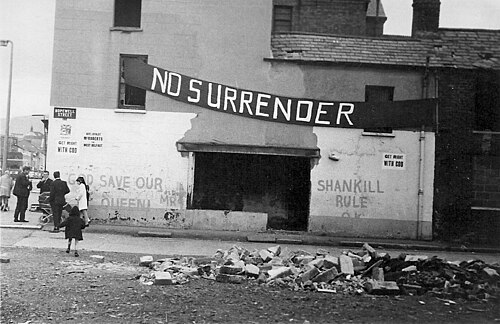
A side street off the Lower Shankill Road as it appeared in the early 1970s
UDA mural in the Lower Shankill Road
Donaghadee, where Lyttle had died after retiring there following his release from prison
The UDA West Belfast Brigade is the section of the Ulster loyalist paramilitary group, the Ulster Defence Association (UDA), based in the western quarter of Belfast, in the Greater Shankill area. Initially a battalion, the West Belfast Brigade emerged from the local "defence associations" active in the Shankill at the beginning of the Troubles and became the first section to be officially designated as a separate entity within the wider UDA structure. During the 1970s and 1980s the West Belfast Brigade was involved in a series of killings as well as establishing a significant presence as an outlet for racketeering.
The Shankill Road neighbourhood of Belfast, as it appeared in the early 1970s
UDA mural in the Lower Shankill
Lower Shankill C Company mural. The 2nd Battalion name recalls the Brigade's origins as the second battalion of the original Belfast UDA
A mural commemorating Stephen McKeag on Hopewell Crescent, off the Shankill Road