Transjordan (region)
Videos
Transjordan, also known as the East Bank or the Transjordanian Highlands, is the part of the Southern Levant east of the Jordan River, mostly contained in present-day Jordan.

Reuben and Gad Ask for Land, engraving by Arthur Boyd Houghton based on Numbers 32.

The Children of Israel Crossing the Jordan, engraving by Gustave Doré. Moshe Weinfeld argues that in the Book of Joshua, the Jordan is portrayed as "a barrier to the promised land."

Near East 1000 BCE

Countries pictured are (clockwise from top right) Syria, Iraq, Saudi Arabia, Egypt (across the Gulf of Aqaba), Israel, the occupied West Bank Territory, and Lebanon. In the center is Jordan.
Moses
Videos
In Abrahamic religions, Moses was the Hebrew prophet who led the Israelites out of slavery in the Exodus from Egypt. He is considered the most important prophet in Judaism and Samaritanism, and one of
Transjordan (region)
…The regions they inhabited became known as Aram (Aramea) and Eber-Nari. The Book of Numbers (chapter 32) tells how the tribes of Reuben and Gad came to Moses to ask if they could settle in the Transjordan. Moses is dubious, but the two tribes promise to join in the conquest of the land, so Moses grants them…
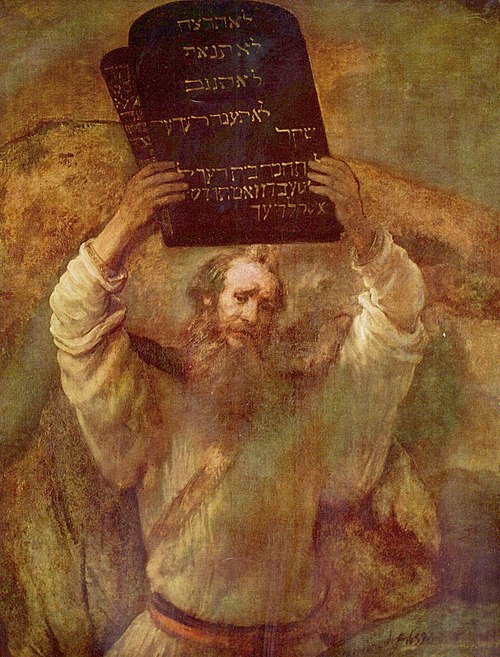
Moses Breaking the Tablets of the Law by Rembrandt, 1659

The Finding of Moses, painting by Sir Lawrence Alma-Tadema, 1904

Moses before the Pharaoh, a sixth-century miniature from the Syriac Bible of Paris

Victory O Lord!, 1871 painting by John Everett Millais, depicts Moses holding his staff, assisted by Aaron and Hur, holding up his arms during the battle against Amalek.