Translating Beowulf
Videos
The difficulty of translating Beowulf from its compact, metrical, alliterative form in a single surviving but damaged Old English manuscript into any modern language is considerable, matched by the la
Beowulf was traditionally believed to have been composed for performance and chanted by a scop to musical accompaniment. Illustration by Joseph Ratcliffe Skelton, c. 1910


Beowulf sails for Heorot. Illustration by J. R. Skelton

Updated monsters: Edwin Morgan translated nicera not as "necks" or "nixies" but as "krakens". 1870 illustration for Twenty Thousand Leagues Under the Seas

Beowulf Cotton MS Vitellius A XV f. 132r
Beowulf
Videos
Beowulf is an Old English poem, an epic in the tradition of Germanic heroic legend consisting of 3,182 alliterative lines, contained in the Nowell Codex. It is one of the most important and most often
Translating Beowulf
…the large number of attempts to make the poem approachable, and the scholarly attention given to the problem. Among the challenges to the translator of Beowulf are whether to attempt a verse or prose rendering; how closely to stick to the original; whether to make the language archaic or to use distinctly…
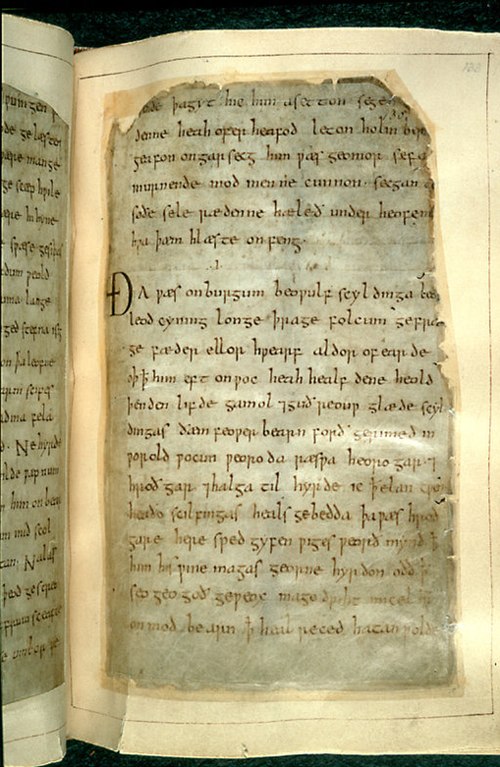
Remounted page, British Library Cotton Vitellius A.XV