Treaty of Waitangi
Videos
The Treaty of Waitangi, sometimes referred to as Te Tiriti, is a document of importance to the history of New Zealand, and its national identity. The cornerstone legislative recognition of the Treaty
The Waitangi Sheet of the Treaty of Waitangi
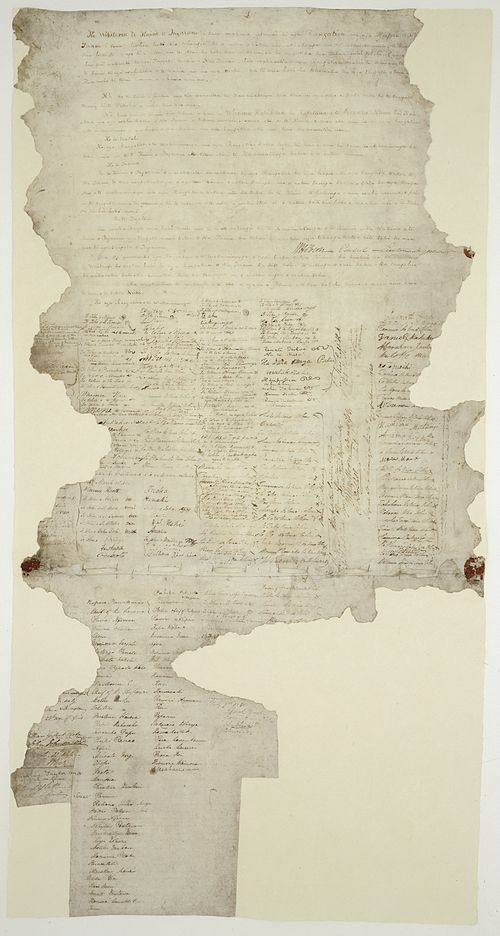

Manuscript copy of the Treaty of Waitangi (in Māori) in the hand of Henry Tacy Kemp

Rev Henry Williams, who translated the treaty into Māori with the help of his son Edward Marsh Williams.

A later reconstruction in a painting by Marcus King, depicting Tāmati Wāka Nene in the act of signing. Hobson is incorrectly shown in full uniform (he was actually wearing civilian clothing).
Waitangi, Northland
Videos
Waitangi is a locality on the north side of the Waitangi River in the Bay of Islands, 60 kilometres north of Whangārei, on the North Island of New Zealand. Here, two documents pivotal to New Zealand h
Treaty of Waitangi
…petitioned the British for protection against French ambitions. Once it had been written and translated, it was first signed by Northern Māori leaders at Waitangi. Copies were subsequently taken around New Zealand and over the following months many other chiefs signed. Around 530 to 540 Māori, at least 13 of them…

Te Whare Rūnanga, the carved meeting house on the Waitangi Treaty Grounds

Elizabeth II in Waitangi, December 1953

James Busby's house at Waitangi