Trilobite
Videos
Trilobites are extinct marine arthropods that form the class Trilobita. One of the earliest groups of arthropods to appear in the fossil record, trilobites were among the most successful of all early

Redlichiida, such as this Paradoxides, may represent the ancestral trilobites.

Fossil Prochuangia from the Cambrian period of Darnjal Formation, Tabas, Iran

Meroperix, from the Silurian of Wisconsin

Walliserops trifurcatus, from Jebel Oufatene mountain near Fezzou, Morocco
Arthropod
Videos
Arthropods are invertebrates in the phylum Arthropoda. They possess an exoskeleton with a cuticle made of chitin, often mineralised with calcium carbonate, a body with differentiated segments, and pai
Trilobite
…Trilobites (; meaning "three-lobed entities") are extinct marine arthropods that form the class Trilobita. One of the earliest groups of arthropods to appear in the fossil record, trilobites were among the most successful of…
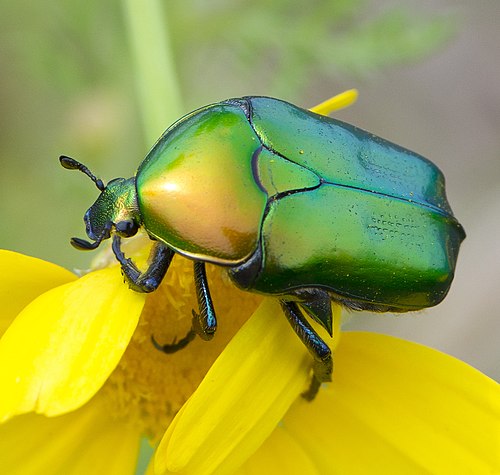
Protaetia cuprea (copper chafer). Beetles are the most diverse order of arthropods.

A cicada climbing out of its exuvia while attached to tree

Long bristles (setae) of a Tliltocatl albopilosus tarantula

Head of a wasp with three ocelli (centre), and compound eyes at the left and right