Triode
Videos
A triode is an electronic amplifying vacuum tube consisting of three electrodes inside an evacuated glass envelope: a heated filament or cathode, a grid, and a plate.

Examples of low power triodes from 1918 (left) to miniature tubes of the 1960s (right)

ECC83, a dual triode used in 1960-era audio equipment, showing the orange glow of the hot cathode.

3CX1500A7, a modern 1.5 kW power triode used in radio transmitters. The cylindrical structure is a heat sink attached to the plate, through which air is blown during operation.

De Forest Audion tube from 1908, the first triode. The flat plate is visible on the top, with the zigzag wire grid under it. The filament was originally present under the grid but was burnt out.
Vacuum tube
Videos
A vacuum tube, vac tube, electron tube, thermionic valve, or tube is a device that controls electric current flow in a high vacuum between electrodes to which an electric potential difference has been
Triode
…A triode is an electronic amplifying vacuum tube (or thermionic valve in British English) consisting of three electrodes inside an evacuated glass envelope: a heated filament or cathode, a grid, and…
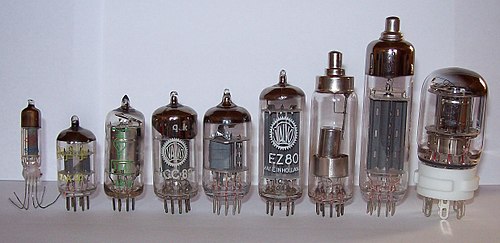
Later thermionic vacuum tubes, mostly miniature style, some with top cap connections for higher voltages

Operating tubes in an audio power amplifier, the hot cathodes emitting their distinctive red-orange glow
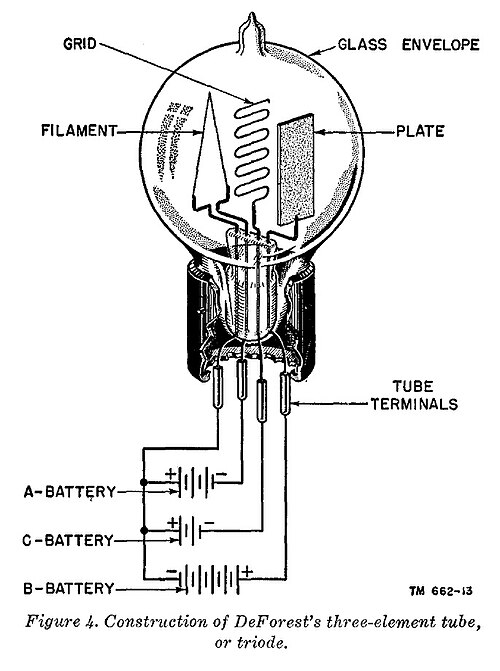
Illustration representing a primitive triode vacuum tube and the polarities of the typical DC operating potentials. Not shown are the impedances (resistors or inductors) that would be included in series with the C and B voltage sources.

US WWV radio station signal generator using vacuum tubes, 1943