Tukulti-Ninurta I was a king of Assyria during the Middle Assyrian Empire. He is known as the first king to use the title "King of Kings".
Tukulti-Ninurta I depicted both standing and kneeling
Stela of Tukulti-Ninurta I. Describes how he rebuilt the temple of the goddess Dinitu from its foundations. "I built within a lofty dais and an awesome sanctuary for the abode of the goddess Dinitu, my mistress, and deposited my stelas.". From Assur, northern Iraq.
Mace with the name of Tukulti-Ninurta I, Louvre Museum
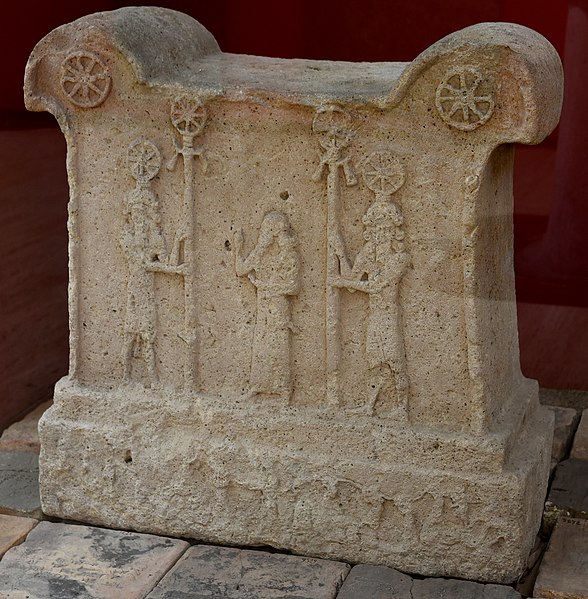
Temple altar offered by Tukulti-Ninurta I. 1243-1207 BCE. From Assur, Iraq. Ancient Orient Museum, Istanbul
Ninurta (Sumerian: 𒀭𒊩𒌆𒅁: DNIN.URTA, possible meaning "Lord [of] Barley"), also known as Ninĝirsu (Sumerian: 𒀭𒎏𒄈𒋢: DNIN.ĜIR2.SU, meaning "Lord [of] Girsu"), is an ancient Mesopotamian god associated with farming, healing, hunting, law, scribes, and war who was first worshipped in early Sumer. In the earliest records, he is a god of agriculture and healing, who cures humans of sicknesses and releases them from the power of demons. In later times, as Mesopotamia grew more militarized, he became a warrior deity, though he retained many of his earlier agricultural attributes. He was regarded as the son of the chief god Enlil and his main cult center in Sumer was the Eshumesha temple in Nippur. Ninĝirsu was honored by King Gudea of Lagash (ruled 2144–2124 BC), who rebuilt Ninĝirsu's temple in Lagash. Later, Ninurta became beloved by the Assyrians as a formidable warrior. The Assyrian king Ashurnasirpal II (ruled 883–859 BC) built a massive temple for him at Kalhu, which became his most important cult center from then on.
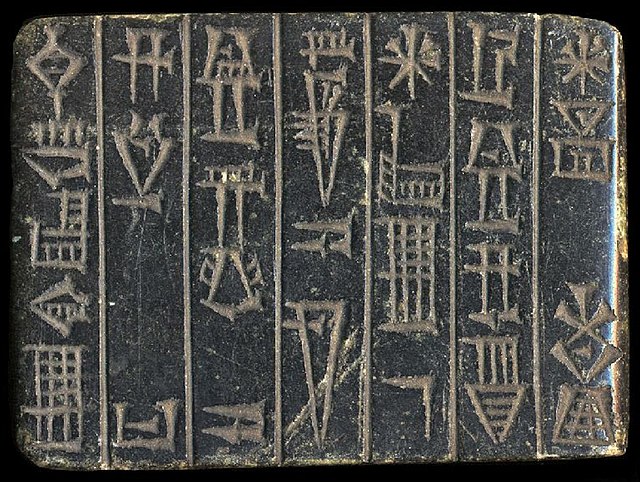
Gudea dedication tablet to God Ningirsu: "For Ningirsu, Enlil's mighty warrior, his Master; Gudea, ensi of Lagash"
The Gudea cylinders, dating to c. 2125 BC, describe how King Gudea of Lagash rebuilt the temple of Ninĝirsu in Lagash as the result of a dream in which he was instructed to do so
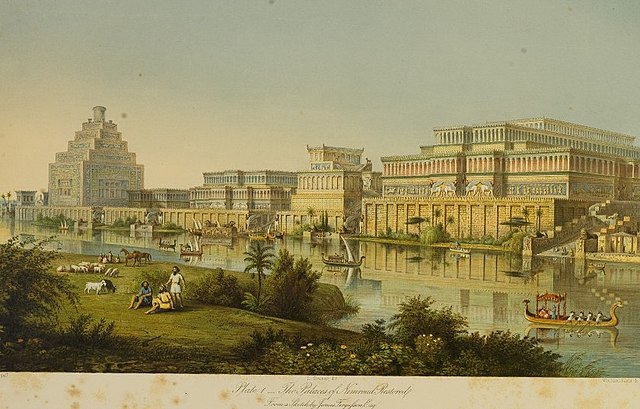
1853 restoration of what the city of Kalhu, Ninurta's main cult center in the Assyrian Empire, might have originally looked like, based on the excavations of the British archaeologist Austen Henry Layard there in the 1840s
Male figure in an Assyrian winged sun emblem from the Northwest Palace at Kalhu; some authors have speculated that this figure may be Ninurta, but most scholars reject this assertion as unfounded