Tumulus
Videos
A tumulus is a mound of earth and stones raised over a grave or graves. Tumuli are also known as barrows, burial mounds, mounds, howes, or in Siberia and Central Asia as kurgans, and may be found thro

Tomb of King Alyattes at Bin Tepe in Lydia, modern Turkey, built c. 560 BC. It is one of the largest tumuli ever built, with a diameter of 360 meters and a height of 61 meters.

The Royal Mounds of Gamla Uppsala in Sweden from the 5th and 6th centuries. Originally, the site had 2,000 to 3,000 tumuli, but due to quarrying and agriculture only 250 remain.

La Cambe German war cemetery

One of the Hallstatt culture–era tumuli in the Sulm valley necropolis
Beowulf
Videos
Beowulf is an Old English poem, an epic in the tradition of Germanic heroic legend consisting of 3,182 alliterative lines, contained in the Nowell Codex. It is one of the most important and most often
Tumulus
…wrestling, running, a duel between two champions to the first blood, discus throwing, archery and spear throwing. Beowulf's body in the Anglo-Saxon poem Beowulf is taken to Hronesness, where it is burned on a funeral pyre. During cremation, the Geats lament the death of their lord, a widow's lament being mentioned…

First page of Beowulf in Cotton Vitellius A. xv. Beginning: HWÆT. WE GARDE / na in geardagum, þeodcyninga / þrym gefrunon... (translation: How much we of Spear-Da/nes, in days gone by, of kings / the glory have heard...)
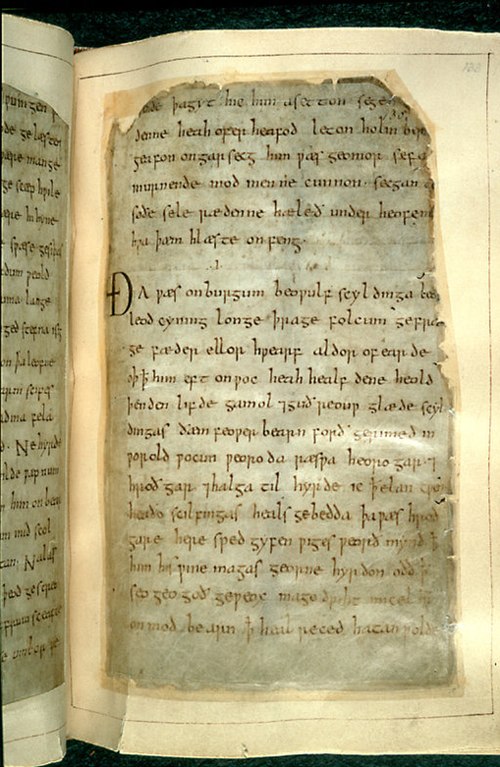
Remounted page, British Library Cotton Vitellius A.XV

The traditional view is that Beowulf was composed for performance, chanted by a scop (left) to string accompaniment, but modern scholars have suggested its origin as a piece of written literature borrowed from oral traditions. Illustration by J. R. Skelton, c. 1910