Turma
Videos
A turma was a cavalry unit in the Roman army of the Republic and Empire. In the Byzantine Empire, it became applied to the larger, regiment-sized military-administrative divisions of a thema. The word
Reconstruction of a Roman cavalryman of the Principate, Nijmegen

Imperial Roman army
Videos
The Imperial Roman Army was the military land force of the Roman Empire from 27 BC to 476 AD, and the final incarnation in the long history of the Roman army. This period is sometimes split into the P
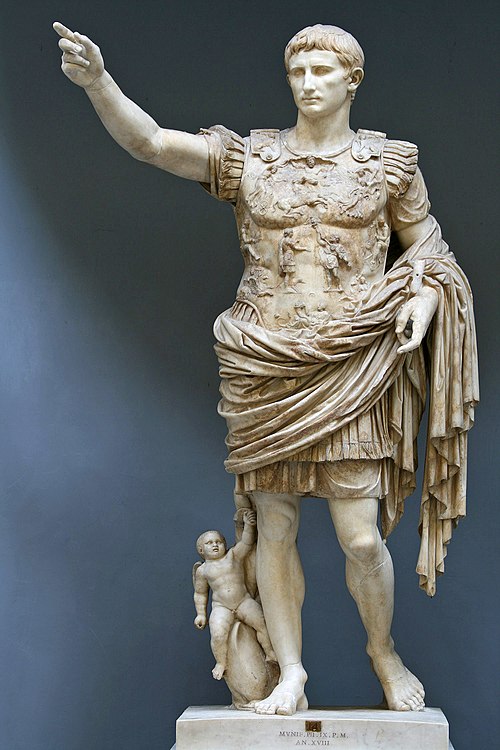
Statue of the founder-emperor Augustus in garb of military commander-in-chief

Imperial Roman legionaries in testudo formation, a relief from Glanum, a Roman town in what is now southern France that was inhabited from 27 BC to 260 AD
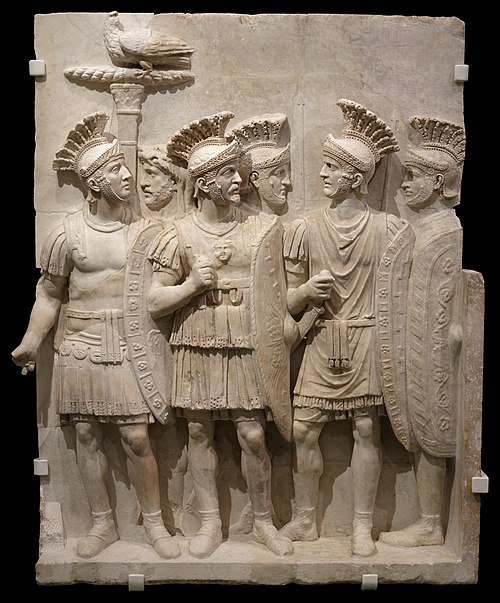
The Praetorians Relief, from the Arch of Claudius, Rome

Roman and Celtic cavalry in combat. Roman sarcophagus, Dallas Museum of Art, c. 190 A.D.