Tutelary deity
Videos
A tutelary is a deity or a spirit who is a guardian, patron, or protector of a particular place, geographic feature, person, lineage, nation, culture, or occupation. The etymology of tutelary expresse
The mural crown of Cybele represents the walls of the city she protects


Lararium depicting tutelary deities of the house: the ancestral Genius (center) flanked by two Lares, with a guardian serpent below
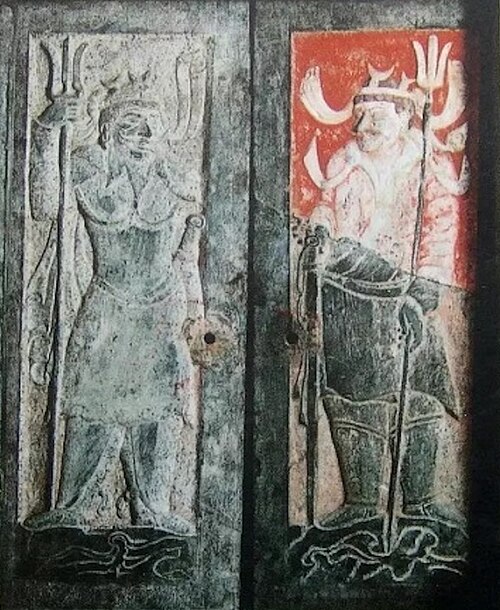
Stone doors of a tomb of the period of the Northern Dynasties to Tʻang Dynasty, excavated in Ching-pien County of the city of Yü-lin, Shensi Province. It shows two figures with tridents as the guardian deities of the tomb.
Daimon
Videos
In ancient Greek religion, daimon, also spelled daemon, often referred to lesser deities, but could more broadly signify "the experience of divine power". The term's etymology is unclear, though it is
Tutelary deity
…concept of safety and thus of guardianship. In late Greek and Roman religion, one type of tutelary deity, the genius, functions as the personal deity or daimon of an individual from birth to death. Another form of personal tutelary spirit is the familiar spirit of European folklore. Socrates spoke of hearing…

Socrates with Alcibiades and the Daimonion. Oil painting by François-André Vincent, 1776, in the Musée Fabre, Montpellier

Winged genius facing a woman with a tambourine and mirror, from southern Italy, about 320 BC