Tyburn
Videos
Tyburn was a manor in London, Middlesex, England, one of two which were served by the parish of Marylebone. Tyburn took its name from the Tyburn Brook, a tributary of the River Westbourne. The name Ty

The "Tyburn Tree"

Toll house (1760 - 1829) serving Bayswater and Edgware turnpikes on the site of Tyburn Tree. From Paul Sandby's Trade Card

View by William Capon across the second site of Tyburn Gallows on Edgware Road near its junction with Bryanston Street, 1785

Stone marking the site of the Tyburn tree on the traffic island at the junction of Edgware Road, Bayswater Road and Oxford Street
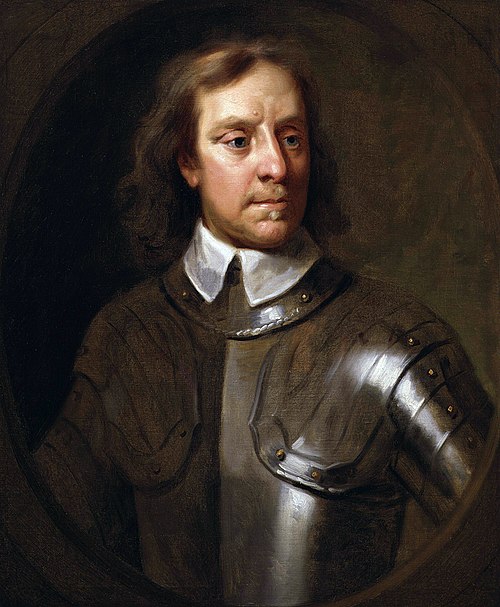
Oliver Cromwell
Videos
Oliver Cromwell was an English statesman, farmer and soldier, widely regarded as one of the most important figures in British history. He came to prominence during the Wars of the Three Kingdoms, init
Tyburn
…site of Tyburn convent. Among the more notable individuals suspended from the "Tree" in the following centuries were John Bradshaw, Henry Ireton and Oliver Cromwell, who were already dead but were disinterred and hanged at Tyburn in January 1661 on the orders of the Cavalier Parliament in an act of posthumous revenge…

Cromwell's House in Ely

Portrait of Cromwell's wife Elizabeth Bourchier

Cromwell at the Battle of Naseby by Charles Landseer, 1851