Tzitzit
Videos
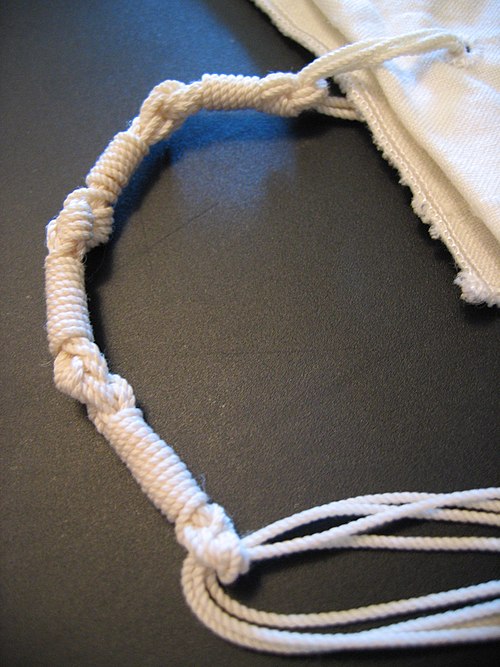
Tzitzit are specially knotted ritual fringes, or tassels, worn in antiquity by Israelites and also modern observant Jews and Samaritans. Tzitzit are usually attached to the four corners of the tallit
Tzitzis

Man wearing tallit katan.

The all-white tzitzit is Ashkenazi. The blue and white tzitzit is knotted according to the Sephardi custom. Note the difference between the 7-8-11-13 scheme and uninterrupted windings (between the knots) on the Ashkenazi, vs. the 10-5-6-5 scheme and ridged winding on the Sephardi tzitzit.

Knitted tallit katan with tzitzit (2 of 4), Basel, 1930s, in the collection of the Jewish Museum of Switzerland.
Tekhelet
Videos
Tekhelet is a blue dye that historically held great significance in ancient Mediterranean civilizations. It is mentioned in the Hebrew Bible and is accordingly commonplace in Jewish culture, wherein i
Tzitzit
…It is a simple garment with a front and back fold, creating four corners to which the tzitzit are fastened. The blue thread mentioned in the Torah, tekhelet, is omitted by most Rabbinic Jews due to controversy over the dye-making process. The medieval rabbis debated the source of the tzitzit obligation for…

Tzitzit produced from a blue dye derived from Hexaplex trunculus and tied according to the opinion of the Sefer ha-Chinuch, resting atop volumes of the Shulchan Aruch.

The flag of Israel, which emulates the tekhelet color for the Star of David and the two tallit-like stripes.

A contemporary tekhelet thread tied according to the method of the 18th-century rabbi Vilna Gaon.

Murex shells from the Iron Age II period (10th-7th centuries BCE) with ancient remains of purple on the shards seen on the right.