Uncial script
Videos
Uncial is a majuscule script commonly used from the 4th to 8th centuries AD by Latin and Greek scribes. Uncial letters were used to write Greek and Latin, as well as Gothic, and are the current style
The Book of Kells, c. AD 800, is lettered in a script known as "insular majuscule", a variety of uncial script that originated in Ireland.

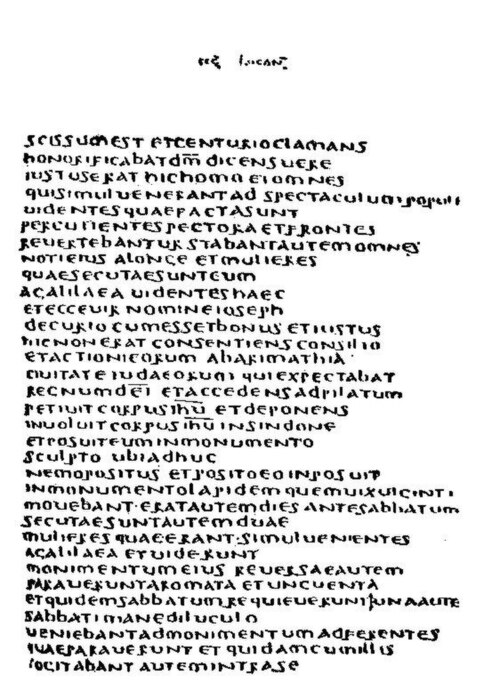
A sample of the Latin text from the Codex Bezae, 5th century AD

A portion of the Codex Sinaiticus, in Byzantine uncial, containing Esther 2:3–8.

An exemplary early 6th-century semi-uncial, Codex Basilicanus S. Petri D 182
Coptic language
Videos
Coptic is a dormant Afroasiatic language. It is a group of closely related Egyptian dialects, representing the most recent developments of the Egyptian language, and historically spoken by the Egyptia
Uncial script
…4th to 8th centuries AD by Latin and Greek scribes. Uncial letters were used to write Greek and Latin, as well as Gothic, and are the current style for Coptic and Nobiin. Early uncial script most likely developed from late rustic capitals. Early forms are characterized by broad single-stroke letters using…

Coptic liturgical inscription from Upper Egypt, dated to the fifth or sixth century.

Sandstone stela, inscribed with Coptic text. The names Phoibammon and Abraham appear. From Egypt, unknown finding place. The British Museum, London

Coptic and Arabic inscriptions in an Old Cairo church

Pottery shard inscribed with 5 lines in Coptic Sahidic. Byzantine period, 6th century AD. From Thebes, Egypt. The Petrie Museum of Egyptian Archaeology, London