The Underground Electric Railways Company of London, Limited, known operationally as the Underground for much of its existence, was established in 1902. It was the holding company for the three deep-l

American trust certificate of the Underground Electric Railways Company of London, Ltd., issued 8 May 1911
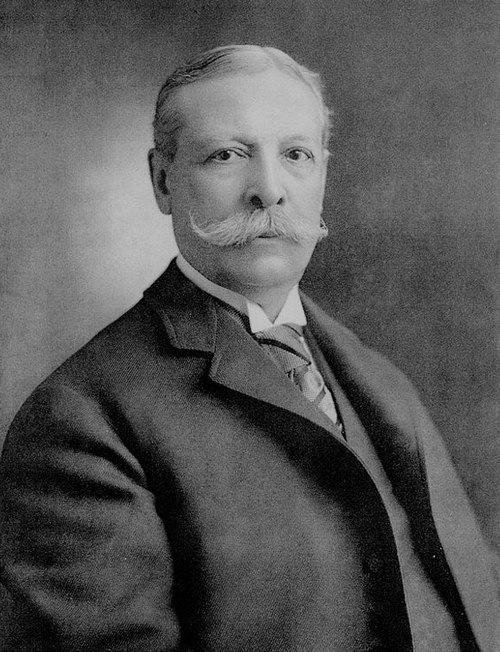
Charles Yerkes, UERL chairman from 1902

Originally built with four chimneys, Lots Road Power Station provided electricity for all of the UERL's lines.

Russell Square station, an example of the Leslie Green design used for the UERL's stations
London Underground
Videos
The London Underground is a rapid transit system serving Greater London and some parts of the adjacent home counties of Buckinghamshire, Essex, and Hertfordshire in England. It is part of the network
Underground Electric Railways Company of London
…Railway. It was also the parent company from 1902 of the District Railway, which it electrified between 1903 and 1905. The UERL is a precursor of today's London Underground; its three tube lines form the central sections of today's Bakerloo, Northern and Piccadilly lines. The UERL struggled financially in the first years…

The name "Tube" comes from the circular tube-like tunnels through which the small-profile (deep tube) trains travel. Northern line 1995 Stock train approaching Hendon Central.

A sub-surface Metropolitan line S8 Stock train at Amersham

Sign on wall beside Marylebone Road beyond station entrance

The Metropolitan Railway opened in 1863 using GWR broad-gauge locomotives.